The War Cabinet
May 26, 2026
1h 24m
The key players behind President Trump’s expansive use of the U.S. military
The War Cabinet
May 26, 2026
1h 24m
Share
The key players behind President Trump’s expansive use of the U.S. military. FRONTLINE examines the inner circle of advisors and officials trying to project U.S. power, from clashes with allies, to taking out foreign leaders, to waging war in the Middle East.
Directed by
Written by
Transcript
Credits
Journalistic Standards
Support provided by:
Learn More
More Documentaries by Michael Kirk
Most Watched
The FRONTLINE Newsletter
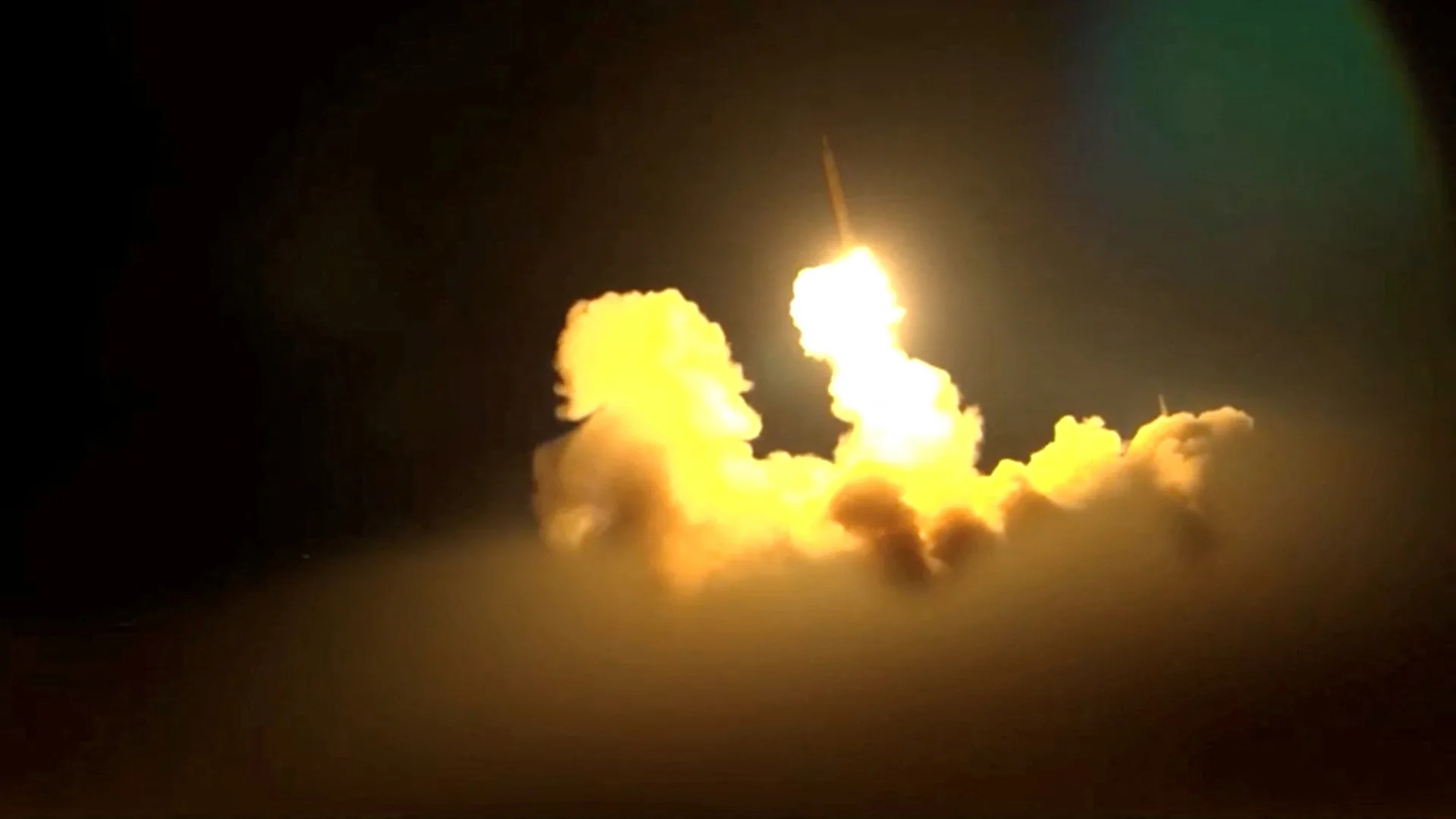
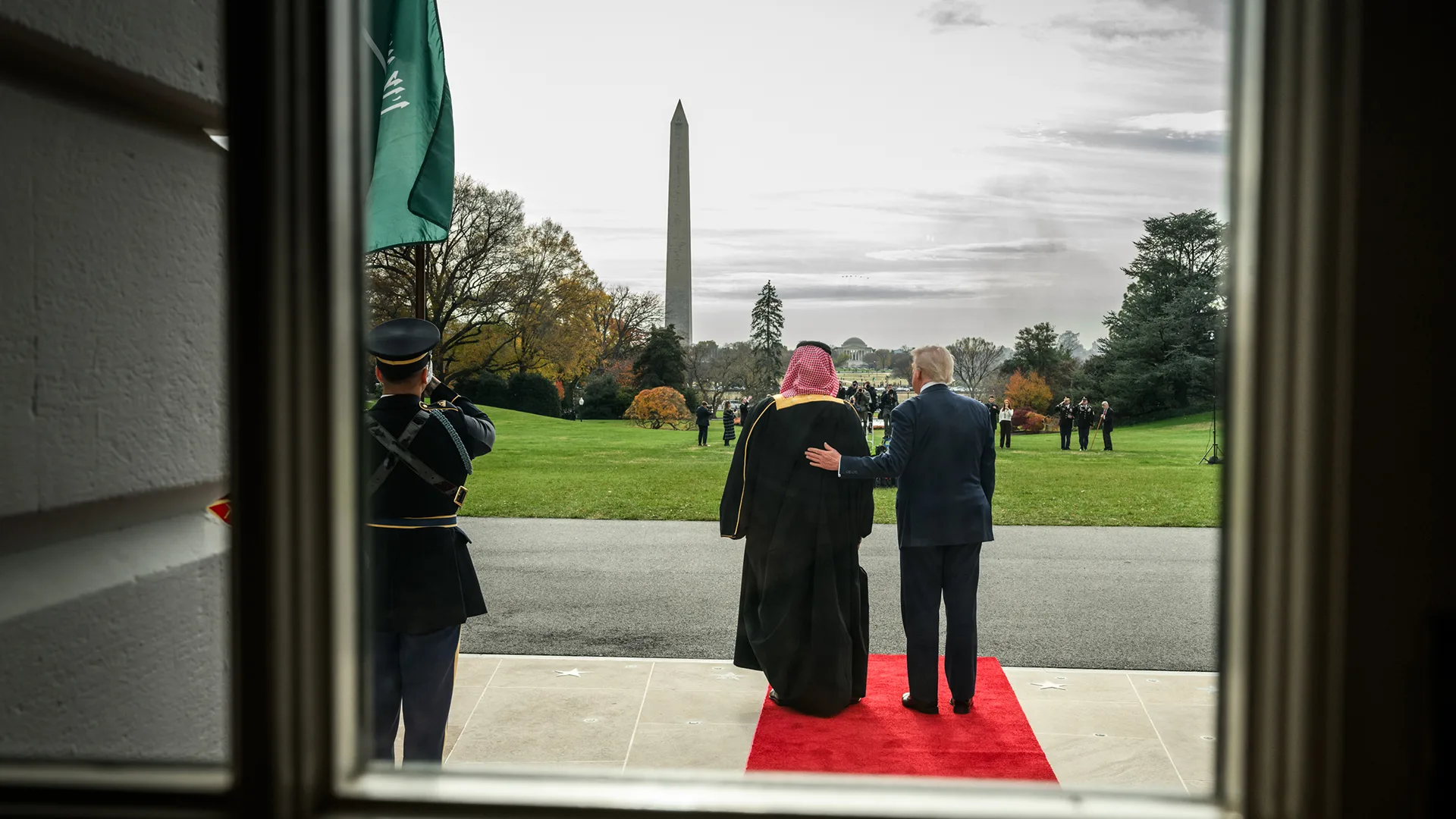
Remaking the Middle East
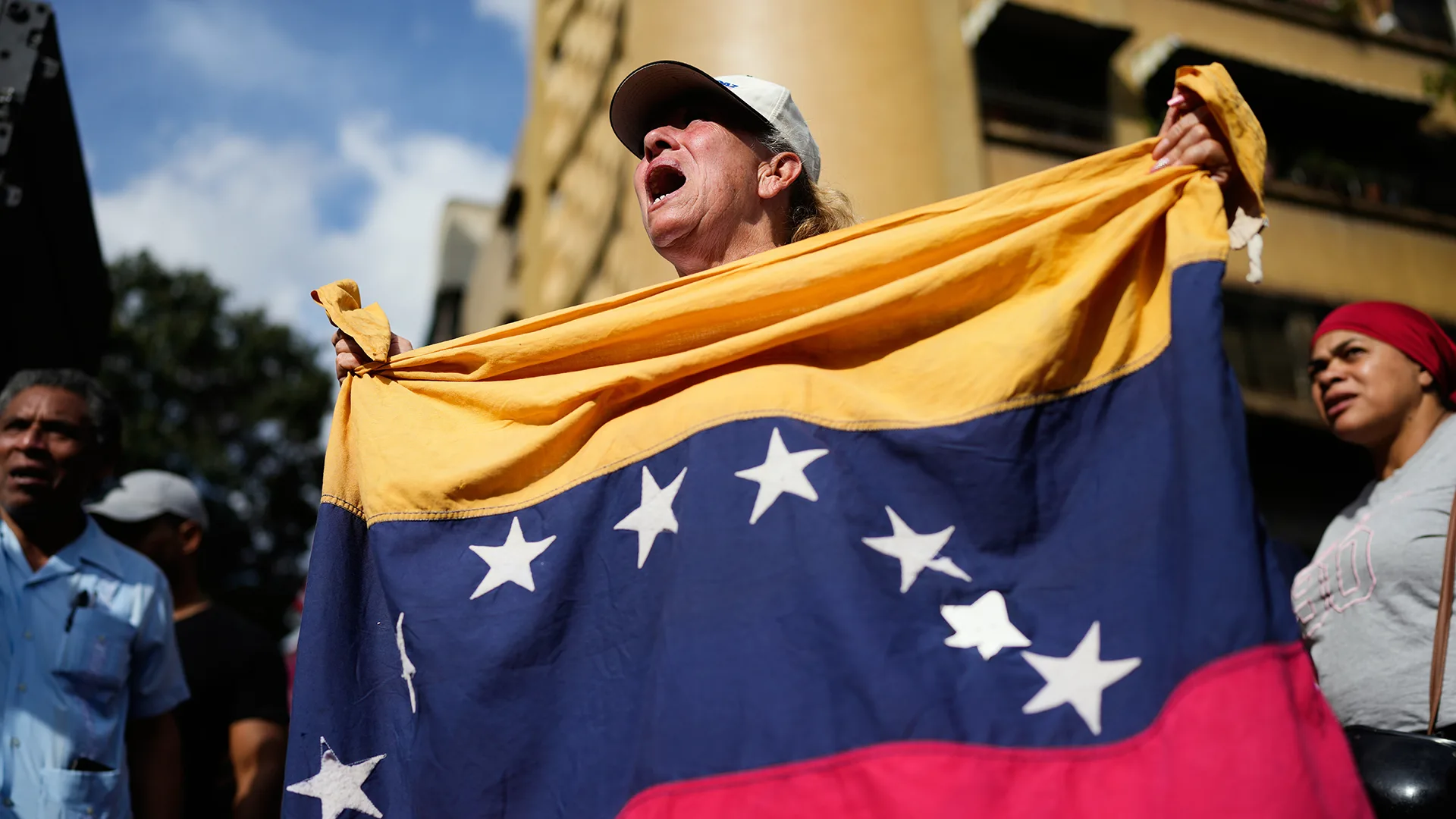
Crisis in Venezuela
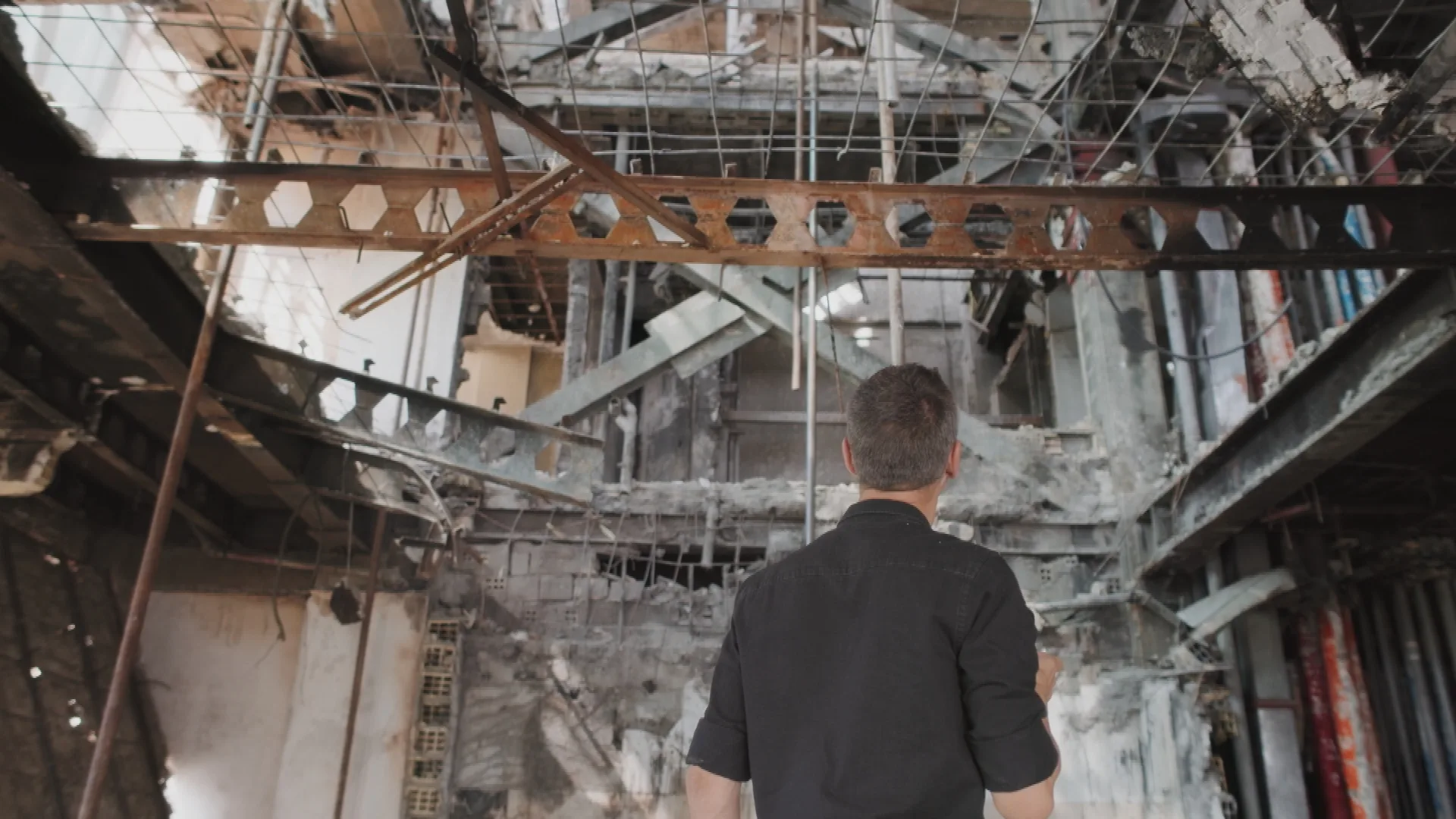
Strike on Iran: The Nuclear Question
Related Stories
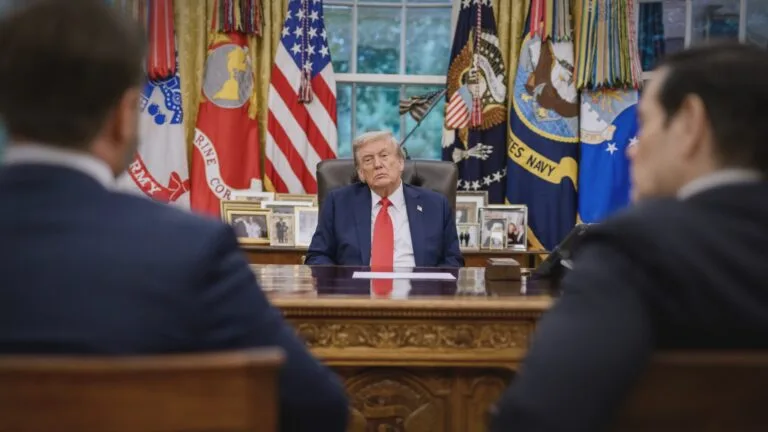
Where to Watch FRONTLINE’s Documentary on Trump’s Inner Circle & His Waging of War
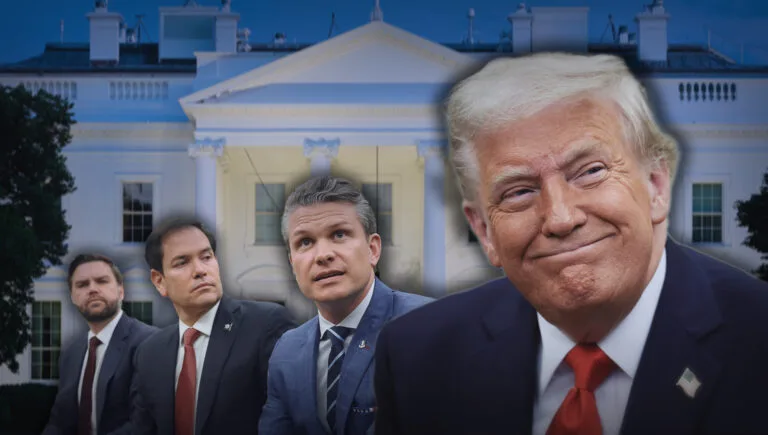
How Trump’s Inner Circle Helped Pave the Road to War With Iran
Related Stories
Where to Watch FRONTLINE’s Documentary on Trump’s Inner Circle & His Waging of War
How Trump’s Inner Circle Helped Pave the Road to War With Iran
MALE NEWSREADER:
The United States has launched defensive strikes in southern Iran.
MALE NEWSREADER:
Iran’s armed forces said any new aggression will be met with a far more severe response.
FEMALE NEWSREADER:
President Trump working overtime to hammer out a deal with Iran.
NARRATOR:
Amid the fallout from the war with Iran, examining the president’s inner circle.
ERIC CORTELLESSA, Time magazine:
They see it as their obligation to enable him to achieve his desires.
ALEXANDER GRAY, Fmr. Trump NSC Chief of Staff:
The people that a president trusts for the most sensitive roles in our national security apparatus, those people put their mark on history.
NARRATOR:
The wars they’ve helped initiate.
PETE HEGSETH, Secretary of Defense:
We will find you, we will hunt you down and we will kill you.
MARCO RUBIO:
This is a president of action. If you don’t know, now you know.
ASHLEY PARKER, The Atlantic:
Essentially, the doctrine is, you mess with us at your own peril. And you’ll find out.
NARRATOR:
And the consequences.
MAJ. GEN. STEVEN LEPPER (RET.), Co-founder, Former JAGs Working Group:
They have systematically dismantled the guardrails that have existed since World War II.
NARRATOR:
Now on FRONTLINE:
VERA BERGENGRUEN, The Wall Street Journal:
The people around him are not only his inner circle, but they probably have way more power between them than we’ve really seen concentrated in a long time.
NARRATOR:
The War Cabinet.
program
2024 Trump campaign
DONALD TRUMP:
And I’m proud to be the first president in decades who started no new wars. That’s very good.
No new wars! Instead, I brought our troops back home—no new wars.
NARRATOR:
As Donald Trump campaigned for his second term, a promise.
DONALD TRUMP:
No new wars.
They said his personality will create wars. I said, “No, my personality’s going to keep us out of wars.”
“Look at him, listen to him, he’s going to start a war. Listen to his rhetoric.”
They thought I was going to start a war. Let me tell you something, I’m going to stop World War III.
NARRATOR:
And at his inauguration he vowed to keep his promise.
PRESIDENT DONALD TRUMP:
We will measure our success not only by the battles we win but also by the wars that we end, and perhaps most importantly, the wars we never get into. My proudest legacy will be that of a peacemaker and unifier. That’s what I want to be, a peacemaker and a unifier.
NARRATOR:
Inside the White House, he formed a team of loyalists: the would-be heir; the seasoned opportunist; the military hawk; the war skeptic; the enforcer; the gatekeeper. They’d help chart a different direction than the one he’d promised.
FEMALE NEWSREADER:
President Trump just announced precision air strikes in Somalia.
MALE NEWSREADER:
The number two leader in ISIS has been killed in a drone strike in western Iraq.
FEMALE NEWSREADER:
At least 70 targets in Syria, in multiple strikes—
NARRATOR:
One show of force after another.
FEMALE NEWSREADER:
U.S. air and naval assets hit dozens of Houthi targets in Yemen.
MALE NEWSREADER:
Operation Midnight Hammer, targeting three Iranian nuclear sites.
NARRATOR:
A path of war.
MALE NEWSREADER:
A dramatic escalation in the U.S. military confrontation with Venezuela.
DONALD TRUMP:
I think we’re just going to kill people that are bringing drugs into our country, OK? We’re going to kill them.
MALE NEWSREADER:
The U.S. carried out large-scale strikes on Venezuela overnight.
FEMALE NEWSREADER:
Nicolás Maduro has been captured and flown out of the country.
MALE REPORTER:
The United States has removed another country’s leader.
NARRATOR:
A fateful decision.
DONALD TRUMP:
A short time ago the United States military began major combat operations in Iran.
NARRATOR:
Now, the president who promised peace has become a wartime president—enabled and empowered by his own war Cabinet.
The War Cabinet
REPORTED BY
Vanessa Fica
Brooke Nelson Alexander
PRODUCED BY
Michael Kirk
Mike Wiser
Vanessa Fica
Elliott Choi
Philip Bennett
NARRATOR:
In the early days of the administration, a test.
WRITTEN BY
Michael Kirk & Mike Wiser
FEMALE NEWSREADER:
The president of Ukraine on his way for a high-stakes meeting with President Trump.
DIRECTED BY
Michael Kirk
NARRATOR:
The war in Ukraine.
February 2025
MALE NEWSREADER:
Today’s Oval Office sit-down could set the stage for Ukrainian President Volodymyr Zelensky.
NARRATOR:
A war Trump claimed he would end on day one.
FEMALE NEWSREADER:
We’re anticipating a really big meeting today with Volodymyr Zelensky and President Trump.
STEVE BANNON, Trump adviser:
It’s Friday, 28 February, in the year of our Lord 2025. We are live from the Patriot Mobile Headquarters. Historic day for President Trump and the MAGA movement.
We covered it live. We were kind of on this from the very moment that it pulled up.
OK, President Trump actually outside.
JACK POSOBIEC:
See the Marine corporal.
STEVE BANNON:
There’s President Donald J. Trump, 47th president of the United States, and a historic day for him.
And then when he showed up, the thing I noticed, Zelensky was in his military garb.
DONALD TRUMP:
He’s all dressed up today.
STEVE BANNON:
I immediately kind of see the president. I just said, “Hey, I’m not so sure this is going to go that well. He’s not showing respect.” My understanding was that it was kind of a fiasco from the very beginning.
NARRATOR:
The president’s inner circle was there: Secretary of State Marco Rubio; Secretary of Defense Pete Hegseth; longtime aide Stephen Miller; Chief of Staff Susie Wiles; and Vice President J.D. Vance.
BENJAMIN WALLACE-WELLS, The New Yorker:
They’re in front of cameras, Zelensky, Trump, Vance. There’s all these microphones dangling in front of them. What is understood to hang on this conversation is the posture of the U.S. towards Russia, Europe and the Ukraine war.
SUSAN GLASSER, The New Yorker:
If you notice, J.D. Vance is getting a little antsy. It’s been going on for a while. The cameras are in there. And the point that Vance wanted to make it seemed like hadn’t come up yet. And he kind of jumps in.
VICE PRESIDENT J.D. VANCE:
Mr. President, Mr. President, with respect, I think it’s disrespectful for you to come into the Oval Office and try to litigate this in front of the American media. You should be thanking the president for trying to bring an end to this conflict.
ELIOT COHEN, Fmr. Dept. of State counselor:
I think Vance was the guy who was supposed to slap Zelensky around. And he did. And to humiliate him and embarrass him, and to badger him the way that they did.
J.D. VANCE:
Have you said “thank you” once in this entire meeting? No, in this entire meeting, have you said, “thank you”?
ASHLEY PARKER, The Atlantic:
One of the reasons Vance was chosen was because he was combative, that he was sort of a troll, that Vance does things that most traditional vice presidents you wouldn’t expect. He knows what Trump likes.
J.D. VANCE:
Offer some words of appreciation for the United States of America and the president who’s trying to save your country.
BILL KRISTOL, Editor at large, The Bulwark:
J.D. Vance seems to relish the bullying that Trump relishes. So since—So he’s a mini-bully when Trump is the big bully.
DONALD TRUMP:
You’re right now not in a very good position. You’ve allowed yourself to be in a very bad position, and he happens to be right about it.
VOLODYMYR ZELENSKY:
From the very beginning of the war I was trying—
DONALD TRUMP:
You’re not in a good position. You don’t have the cards right now. With us you start having cards.
VOLODYMYR ZELENSKY:
I’m not playing cards.
DONALD TRUMP:
Right now you don’t—yeah, you’re playing cards. … We gave you through the stupid president $350 billion—
VERA BERGENGRUEN, The Wall Street Journal:
Our jaws were just on the floor. We were watching this. I think that was the reaction, from what I know, from basically all U.S. allies, foreign diplomats. No one could believe what they were seeing. And Ukraine’s ambassador to the United States kind of put her head in her hands in the middle of meeting, just couldn’t help herself.
STEVE BANNON:
I think J.D. jumped in there, the vice president jumped in there, and kind of very appropriately kind of laid things out.
J.D. VANCE:
—and let’s go litigate those disagreements rather than trying to fight it out in the American media when you’re wrong. We know that you’re wrong.
CURT MILLS, Exec. director, The American Conservative:
Vance brought that righteous indignation to that meeting. For a lot of the people on the so-called New Right, who are the national populist or the hard-core MAGA base or people who really want to see change in American foreign policy, and I’m one of them, it was the coup de grâce of a new generation of approach.
NARRATOR:
Curt Mills, the editor of The American Conservative, is a prominent voice of the New Right and has known Vance for years.
CURT MILLS:
In some ways it was the high-water mark of Vance’s political career to that point.
STEVE BANNON:
I think it was very important that J.D. was in the room. Obviously, he was picked for vice president, I think, because he kind of represented a new and different aspect of the MAGA movement.
BENJAMIN WALLACE-WELLS:
If you think about the people who we know called Trump on behalf of J.D. Vance, it’s Don Jr., it’s Tucker Carlson, it’s Steve Bannon.
IAN WARD, Politico:
Carlson was lobbying very aggressively in 2024 for Trump to select Vance as his vice president. Carlson very consciously positions Vance as a future leader in the party, invites him on his show.
Tucker Carlson Show, 2019
TUCKER CARLSON:
One of the smartest voices in what is becoming a new movement within conservatism, we’re always happy to have him here. J.D. Vance, thanks a lot for coming on.
Tucker Carlson Show, 2023
J.D. VANCE:
We need people who actually are fighting to save an American way of life for the next generation. That’s why I’m doing this.
ERIC CORTELLESSA, Time magazine:
What J.D. Vance represents is a kind of ideological faction inside of the White House that is opposed to America getting more and more entangled overseas. He is opposed to military adventurism. He is opposed to foreign entanglements.
Bannon War Room, 2022
J.D. VANCE:
I think it’s ridiculous that we’re focused on this border in Ukraine. I don’t—I got to be honest with you, I don’t really care what happens to Ukraine one way or another.
Tucker Carlson Show, 2022
J.D. VANCE:
Let’s focus on the problems that are closer to home, solve those first and then we can go and worry about the rest of the world. By the way—
BENJAMIN WALLACE-WELLS:
To be Carlson’s guy, Bannon’s guy, means that you are carrying forth the America First project, the kind of hard nationalist core of Trumpism. As vice president, that’s often the project he’s trying to defend.
NARRATOR:
And that’s what Vance was doing in the Oval Office: trying to limit the U.S. role in the war between Ukraine and Russia.
DONALD TRUMP:
All right, I think we’ve seen enough. What do you think, huh? This is going to be great television, I will say that. [Laughter]
NARRATOR:
One member of the inner circle was not laughing it off.
DEXTER FILKINS, The New Yorker:
As this terrible meeting is going on, Marco Rubio is sitting very quietly, deep into the couch, sinking lower and lower into that couch, with every passing second. His face is absolutely ashen. And he’s saying nothing. The secretary of state is trying everything he can to disappear. And I don’t blame him. [Laughs] I don’t blame him. But he’s trying to disappear. He doesn’t want to be there. It’s awful. It’s all over his face.
MISSY RYAN, The Atlantic:
Rubio had been a strong supporter of Ukraine, as were many other Republicans. Here we’re seeing this mismatch between someone like Rubio, who was more of a traditional GOP foreign policy guy. And it seemed, in some ways, like a bad fit with the America First version, the MAGA version.
NARRATOR:
Rubio had famously clashed with Trump in the 2016 Republican primary.
DONALD TRUMP:
Don’t worry about it. Don’t worry about it, Little Marco!
Little Marco! Little Marco!
MARCO RUBIO:
He’s always calling me “Little Marco.” Have you seen his hands? They’re like this. And you know what they say about men with small hands.
VIVIAN SALAMA, The Atlantic:
He was once President Trump’s archnemesis on the campaign trail.
DONALD TRUMP:
Look at those hands, are they small hands? And, he referred to my hands—if they’re small, something else must be small. I guarantee you there’s no problem—I guarantee it.
VIVIAN SALAMA:
Marco Rubio was a much more mainstream, traditional Republican from Florida.
MARCO RUBIO:
I will never stop until we keep a con man from taking over the party of Reagan and the conservative movement.
DEXTER FILKINS:
He spent his entire career advocating essentially the opposite of what President Trump claims to want. He was a Reagan Republican. He believed in human rights, an aggressive foreign policy abroad. That’s what Marco Rubio stood for, always.
NARRATOR:
Rubio was a defender of President Bush’s war in Iraq.
MARCO RUBIO:
—and George W. Bush enforced what the international community refused to do, and again, he kept us safe and I’m forever grateful for what he did.
NARRATOR:
While Trump did the opposite.
DONALD TRUMP:
Obviously the war in Iraq was a big fat mistake, all right? We should have never been in Iraq. We have destabilized the Middle East.
NARRATOR:
Trump’s anti-war message resonated with voters that year, even in Marco Rubio’s home state of Florida.
MALE REPORTER:
I mean, this map just tells the story, I got to show it to you. See this purple? That represents Marco Rubio. All that red, that’s Donald Trump. So basically we’re saying here—
SUSAN GLASSER:
I think Marco Rubio spent a couple years after that defeat wavering over what course to take. He believed Donald Trump was a dangerous force in the world. He believed what he was doing was antithetical to American interests. But then he looked at what happened to those Republicans who spoke out against Donald Trump and essentially ended their own political careers, and Marco Rubio’s political career—he didn’t want it to be over.
DEXTER FILKINS:
Rubio has to remake himself into a populist. And he’s never been a populist. So he writes a book, and it’s a very angry book, declaring he’s basically a populist.
“Decades of Decadence” by Marco Rubio
MARCO RUBIO [reading]:
America is not going to be saved by those clinging to the pre-Trump Republican Party.
STEVE BANNON:
When I was reading this book, I was going, “I can’t believe Marco Rubio wrote this.” He talked about being changed by Trump’s policies. His journey has been one of the most significant journeys.
Republican National Convention, 2024
NARRATOR:
By the time Trump ran again in 2024, Rubio’s conversion was complete.
MARCO RUBIO:
My fellow Americans, the only way to make America wealthy and safe and strong again is to make Donald J. Trump our president—again.
STEVE BANNON:
The biggest change for Marco is from being the most die-hard, looked like the next generation of neocon to being I think closer akin to us today than anybody that’s made that journey so far. It’s quite significant.
EDWARD LUCE, Financial Times:
His chameleon-like ability to adapt to Trump more than made up for all the harsh words that he and Trump had exchanged on the podium in 2016. And Trump by then saw him not just as a loyalist but a pretty skilled loyalist. And so we get full circle, Rubio becoming Trump’s secretary of state.
DONALD TRUMP:
So Marco, go ahead.
MARCO RUBIO:
Well, Mr. President, first of all, everyone’s made this comment already, and it needs to be echoed again—you were elected as the president of working Americans. The peacemaker in chief. Think about it, how fortunate we are as Americans to have a president who has made peace a priority.
VIVIAN SALAMA:
They all swore loyalty when they joined the Cabinet. Unlike in the first Trump administration, this administration has been groomed to fall in line and do what the president says.
TULSI GABBARD, Director of National Intelligence:
This is just such a great opportunity really to recognize your leadership as a true champion for working people.
NARRATOR:
It was a much different dynamic than his first term.
ALEXANDER GRAY, Fmr. Trump NSC Chief of Staff:
The president had Secretary of State Rex Tillerson, multiple secretaries of defense, chiefs of staff, who were actively obstructing and undermining the agenda the American people elected him on.
NARRATOR:
Alexander Gray served on Trump’s National Security Council during that first term.
ALEXANDER GRAY:
You had unelected appointed officials who took it upon themselves, in some instances to literally steal documents off the desk of the president of United States not because they were unlawful, but because they disagreed with a policy outcome.
DAVID SANGER, The New York Times:
He had thought about bombing cartels in Mexico, but he had been restrained by some of his advisers, including his then defense secretary.
MALE NEWSREADER:
People demand justice for George Floyd and call for an end to racial inequality.
NARRATOR:
When Black Lives Matter protests emerged in 2020, Secretary of Defense Mark Esper and Joint Chiefs Chairman Gen. Mark Milley resisted Trump’s efforts to invoke the Insurrection Act and send in federal troops.
ALEXANDER GRAY:
You want to talk about coups? That is an extraordinary silent coup against the democratic process.
NARRATOR:
Other members of the administration at the time saw it differently.
JOHN BOLTON, Fmr. Trump National Security Adviser:
Nobody was trying to make the decision for him. They were trying to make sure he was making an informed decision. And I think that process frustrated him.
NARRATOR:
John Bolton, a longtime Republican foreign policy official, eventually had a major falling out with Trump.
JOHN BOLTON:
I mean, my title was national security adviser, which implies I ought to give advice, which I tried to do. That’s not thwarting him. It’s trying to back him off, to give him a chance to get another perspective and to make the most well-informed decision.
NARRATOR:
Bolton had been part of what some called “the adults in the room.”
FIONA HILL, Fmr. Trump National Security Council:
This idea of being the adults in the room, of course, that was the projection from the outside. But what they would spend most of the time was trying to stop terrible things from happening.
NARRATOR:
Fiona Hill is an expert on Russian and European affairs. She served on Trump’s National Security Council.
FIONA HILL:
I often thought of it as being the firefighters and all the engineers and technicians of Chernobyl, when you were in the middle of a meltdown. And you were the people who were trying to contain the fallout or build the sarcophagus around it.
ERIC CORTELLESSA:
What President Trump very deliberately and methodically created as he mounted his comeback to the White House was to remove people who saw themselves as guardrails, to eradicate any possibility of having people who were going to act as brakes on his desires.
PETE HEGSETH, Secretary of Defense:
From the troops directly, which they ask me to say all the time, thank you for your leadership, for your boldness, for your clarity, for providing a shield for the rest of us to put America first and to apply peace through strength. We’re in the strength business, that’s our jobs—
NARRATOR:
Trump’s new secretary of defense was just the kind of person he was looking for.
VERA BERGENGRUEN:
Pete Hegseth, who Trump really likes because he’s straight out of central casting. Trump likes his people, the way he likes them to look like they’re out of central casting, he wants them to sound like that as well.
U.S. Military footage
PETE HEGSETH:
There we go.
This is a new era of the Department of War that is focused on winning wars, not just perpetually defending.
DAVE PHILIPPS, The New York Times:
More than any other secretary of defense, he is a showman. He understands theater and image and message.
U.S. Military footage
PETE HEGSETH:
We’re restoring the warrior ethos. We’re not interested in your woke garbage and your political correctness.
NARRATOR:
Hegseth has said his views were formed the hard way—during the worst days of the Iraq War in a unit that later earned an infamous nickname.
EDWARD LUCE:
He was formerly in the National Guard. He was deployed to Iraq. He was in a quite notorious unit called the Kill Company, which had various prosecutions. And Trump really got to know Hegseth when he used his weekend show as a Fox anchor to lobby for the pardoning of people who had patently abused their role as American soldiers to kill civilians.
PETE HEGSETH:
These are the good guys. These are the war fighters. They’re not war criminals, they’re warriors.
JAMIE MCINTYRE, Washington Examiner:
Trump liked his combativeness. He liked his aggressiveness. He liked what he said.
PETE HEGSETH:
You train someone to go fight and kill the enemy, then they go kill the enemy the way someone doesn’t like, and then we put them in jail or we throw the book at them.
STEVE BANNON:
Trump is looking for people who can communicate ideas, complicated ideas, and make them accessible to the American people.
PETE HEGSETH:
The rules, the bureaucracy, the rules of war get twisted in certain ways where now war heroes are being prosecuted like criminals.
DAN CALDWELL, Fmr. Pentagon senior adviser:
He is someone who approaches most issues in the Department of Defense through the grunt’s-eye view. He is looking at how a policy is implemented through the eyes of the people that are ultimately going to have to implement it.
U.S. Military footage
PETE HEGSETH:
Let’s go! Make your country proud!
BENJAMIN WALLACE-WELLS:
Unlike Rubio or Vance, Hegseth is a figure who comes into the administration without any native political base, without real connections on the Hill. The only way he gets this job is that Donald Trump as the president selects him for it.
BILL KRISTOL:
I think the choice of Hegseth is extremely easy to explain. Trump wanted someone in Defense who would be totally subordinate to him, whom he could trust to do what he told to do. Hegseth established early on that the military had to be loyal to Trump.
FEMALE NEWSREADER:
Major changes are happening at the Pentagon after a string of firings over the weekend.
JAMIE MCINTYRE:
He starts this campaign to purge the generals that he thinks are disloyal or didn’t get promoted for the right reason.
MALE NEWSREADER:
The nation’s top-ranked military officer among several who were fired last night.
JAMIE MCINTYRE:
He fires the Joint Chiefs chairman, who’s Black. He fires the chief of naval operations, who is a woman.
Shawn Ryan podcast, 2024
PETE HEGSETH:
Any general that was involved, general, admiral, whatever, that was involved in any of the DEI woke s— has got to go.
BRENT SADLER, Heritage Foundation:
It wouldn’t be the first time a president fired a lot of generals and admirals. Those generals and admirals first and foremost serve at the president’s behalf, in executing his authority as the top elected official representing the American people.
NARRATOR:
Hegseth would also target the military’s top lawyers—the JAGs.
MALE NEWSREADER:
The firings at the Pentagon are now reaching the top lawyers, judge advocates general.
DAVE PHILIPPS:
Pete Hegseth hates military lawyers. He calls them JAG-offs.
“The War on Warriors” by Pete Hegseth
PETE HEGSETH [reading]:
JAG-offs. There are some good ones out there, but most spend more time prosecuting our troops than they do putting away bad guys.
JAMIE MCINTYRE:
He tells the story in his book about how one of the JAG officers spoke to his company, to advise them about the rules of engagement. And the lawyer said, “You can’t shoot them just because they’re walking with a weapon.” And when the lawyer went away, Hegseth gathered his troops together and said:
“The War on Warriors” by Pete Hegseth
PETE HEGSETH [reading]:
I will not allow this nonsense to filter into your brains. Men, if you see an enemy who you believe is a threat, you engage and destroy the threat. That’s a bulls— rule that’s going to get people killed.
MAJ. GEN. STEVEN LEPPER (RET.), Co-founder, Former JAGs Working Group:
The current civilian leadership of the military has embarked on what I’ve called a road to lawlessness.
NARRATOR:
Steven Lepper was one of the top Air Force JAGs. He retired before Trump came to office.
STEVEN LEPPER:
If you want to send a message that the law and lawyers don’t matter, what better way than to decapitate the judge advocate generals corps of the military services?
NARRATOR:
To demonstrate what he wanted, Hegseth summoned the top brass—hundreds of them.
MALE NEWSREADER:
Pete Hegseth is calling U.S. generals and admirals around the globe, away from their posts—
FEMALE NEWSREADER:
This is a rare and urgent order, sent to commanders around the world—
JAMIE MCINTYRE:
He calls every general and admiral, and every senior enlisted person, from all over the globe, to come to Quantico, Virginia, at the Marine base, so he can give them a lecture in person.
PETE HEGSETH:
As you have seen, I have fired a number of senior officers since taking over. We’ve done our best to thoroughly assess the human terrain. The new compass heading is clear: out with the Chiarellis, the McKenzies and the Milleys.
GEN. PETER CHIARELLI, Fmr. Army Vice Chief of Staff:
I heard about it when a reporter I know called me up. She told me that my name had been mentioned, and I voiced a large element of surprise.
NARRATOR:
Gen. Peter Chiarelli was second in command of the Army during the Iraq War.
ERIC CORTELLESSA:
He called out specifically Gen. Chiarelli, who had been a very fierce proponent of ensuring that civilians were protected, ensuring that international norms were upheld, rules of engagement were maintained.
PETER CHIARELLI:
I believe when you injure civilians you’re putting your service members in more danger than when you avoid that. You just make enemies.
EDWARD LUCE:
Hegseth is warning those like Gen. Chiarelli, people who have minds of their own and prepared to say that they would not obey unlawful orders, that those people are for the trash can of history.
PETE HEGSETH:
Of course, we’re going to disagree at times, but when civilian leaders issue lawful orders, we execute.
EDWARD LUCE:
He wants loyalists. This is a new regime here. We want absolute loyalty, and we will not tolerate deep state meddling.
PETE HEGSETH:
If the words I’m speaking today are making your heart sink, then you should do the honorable thing and resign.
BRENT SADLER:
I think that was an important one, as we say in the military, “Come to Jesus” session, to say, “Look, focus in on the mission. If you can’t do that, you do the honorable thing and resign and leave.” We have a professional responsibility to execute our duties, not with any personal animus or political shadows.
NARRATOR:
In all, more than a dozen of the nation’s most senior officers would be fired. Others would retire.
JAMIE MCINTYRE:
I think Trump really revels in the fact that he has at his disposal the most powerful military in the world, and that at his command they will do his bidding.
NARRATOR:
Within weeks of taking office, Trump was presented with a choice about whether to use this military power.
MALE NEWSREADER:
A surge of attacks from Yemen’s Houthi rebels continues to disrupt the global supply chain.
FEMALE NEWSREADER:
Houthi militias showing no sign of backing down.
FEMALE NEWSREADER:
The Houthis have attacked more than 250 commercial and naval ships trying to pass through the Red Sea.
MALE NEWSREADER:
President Trump redesignated the Houthis as a terror organization.
JEFFREY GOLDBERG, Editor in chief, The Atlantic:
Beginning of March I got a Signal request, a connection request from somebody named Michael Waltz, the national security adviser.
MALE VOICE [reading Signal message]:
Michael Waltz added you to the group.
NARRATOR:
Jeffrey Goldberg’s invitation was a mistake. He’s a journalist, the editor in chief of The Atlantic.
JEFFREY GOLDBERG:
Signal is a secure messaging app—a commercial messaging app—nonsecure from the government’s perspective. I thought it was a disinformation operation or some elaborate spoof. And then the next thing I know I was added into something called the Houthi PC small group. The members of this group were most of the highest officials of the United States. The secretary of state, the secretary of defense, the head of the CIA, Tulsi Gabbard, the director of national intelligence. Basically everyone was in the chat.
MALE VOICE [reading Signal message]:
Michael Waltz: Team—establishing a principles group for coordination on Houthis.
JEFFREY GOLDBERG:
The senior-most officials of the United States government were using Signal to talk about upcoming bombing campaigns, and inadvertently invited a journalist. I’ve never been involved in anything this absurd or surreal.
MALE VOICE [reading Signal message]:
Michael Waltz: We will work with DOD to ensure COS, OVP and POTUS are briefed.
PETER BAKER, The New York Times:
It is a window into their internal conversations, and in some ways to me, the most interesting one is J.D. Vance.
MALE VOICE [reading Signal message]:
J.D. Vance: I think we are making a mistake. … The strongest reason to do this is, as POTUS said, to send a message. But I am not sure the president is aware how inconsistent this is with his message on Europe right now.
VIVIAN SALAMA:
That was an extraordinary show of his politics. It is a reminder that there are different politics at play in this administration.
MALE VOICE [reading Signal message]:
J.D. Vance: There is a strong argument for delaying this a month.
EDWARD LUCE:
Hegseth, by contrast, is kind of what you would expect from Hegseth.
MALE VOICE [reading Signal message]:
Pete Hegseth: We are prepared to execute, and if I had final go or no-go vote, I believe we should.
JEFFREY GOLDBERG:
They’re debating whether the United States should bomb the Houthis in Yemen at this particular time. J.D. Vance was very much opposed.
MALE VOICE [reading Signal message]:
J.D. Vance: I just hate bailing Europe out again.
CURT MILLS:
As the vice president laid out in the Signal group chat, it’s basically a European problem.
MALE VOICE [reading Signal message]:
Pete Hegseth: We are the only ones on the planet … who can do this. Nobody else even close. … I think we should go.
JEFFREY GOLDBERG:
Then what happens in the chat, which I think was interesting in and of itself, is Stephen Miller comes in, kind of like the president’s enforcer, and says, “I heard the president say that he wanted to do this. So we’re doing this.”
MALE VOICE [reading Signal message]:
Stephen Miller: As I heard it, the president was clear: green light.
JEFFREY GOLDBERG:
And then everybody shuts up, including the vice president of the United States.
BILL KRISTOL:
That was very revealing, I think. Stephen Miller is the deputy White House chief of staff. The idea that he’s telling the secretary of defense and the vice president of the United States what has been decided is pretty astounding.
NARRATOR:
Stephen Miller had been around Trump longer than almost anyone.
JONATHAN BLITZER, The New Yorker:
Miller’s rise to power has been quite simply meteoric. He began, really, as a low-level communication staffer in the Senate. Miller earned a reputation for being on the extreme right-wing end of the party.
NARRATOR:
In the first term he was a top White House adviser.
JONATHAN BLITZER:
In Trump One I think Miller proved his indispensability to Trump, in large part by showing his loyalty above all. He was one of Trump’s longest serving aides. Trump trusted him.
NARRATOR:
After the Jan. 6 attack on the Capitol, Miller continued to stay close to Trump.
2024 Trump campaign
STEPHEN MILLER:
Did Donald Trump, God forbid, did he surrender? No, he fought. He fought with everything he had.
STEVE BANNON:
I think the world of Stephen Miller. And I even think the world of Stephen Miller’s bedside manner. He’s never going to back down an inch.
STEPHEN MILLER:
In nine days your rescue is coming. In nine days your salvation is at hand. In nine days Donald J. Trump is going to go back to the White House.
STEVE BANNON:
I call him sometimes, teasingly, the prime minister. Stephen’s taken a very big role in I think national security and foreign affairs.
NARRATOR:
That was on full display in the Signal chat.
ALEXANDER GRAY:
He was being very clear that the president had made a decision, and when he makes a decision, you execute.
ASHLEY PARKER:
Stephen Miller weighs in and everyone’s like, “Oh, yeah, like, Stephen says to do it,” and then the bombing campaign launches.
MALE VOICE [reading Signal message]:
Pete Hegseth: 12:15 Eastern time: F-18s launch.
JEFFREY GOLDBERG:
Pete Hegseth put in the time the planes were launching, and where they were going and all kinds of information that I had never seen shared so recklessly before.
MALE VOICE [reading Signal message]:
Pete Hegseth: 13:45: … F-18 first strike window starts. … 15:36: … first sea-based Tomahawks launched.
JEFFREY GOLDBERG:
That’s information that is too dangerous to have out there in the wild. So extremely stupid that this even happened. It just betrayed an inexperience, a recklessness, a kind of a show-offy quality.
MALE VOICE [reading Signal message]:
Stephen Miller: Great work all. Powerful start.
MALE VOICE [reading Signal message]:
Michael Waltz: [Fist bump emoji, American flag emoji, fire emoji.]
Steve Witkoff: [Prayer emoji, prayer emoji, muscle emoji, American flag emoji, American flag emoji.]
NARRATOR:
President Trump was watching the strikes from his home in Mar-a-Lago.
PETER BAKER:
For Trump it’s a way of chest-beating and saying how tough we are. “We’re really taking them out” and everything. Tough is big when it comes to Trump. This is the height of his foreign policy aspirations is to be tough, to look tough. It’s not a lot more subtle than that.
NARRATOR:
Despite having promised to avoid foreign wars, Trump was reveling in the one he’d just initiated.
MALE VOICE [reading Trump Truth Social post]:
Tremendous damage has been inflicted upon the Houthi barbarians. They will be completely annihilated!
JAMIE MCINTYRE:
Trump likes to say that that operation against the Houthis was a complete success and that the Houthis were beaten into submission.
DONALD TRUMP:
The Houthis want peace because they’re getting the hell knocked out of them.
The attack was unbelievably successful that night.
JAMIE MCINTYRE:
It’s not even close to true. That war went on for 52 days. Achieved almost nothing, except the expenditure of billions of dollars. The Houthis are still there.
JOHN BOLTON:
I think he was persuaded that if he went on much longer he would be a loser. So he’s never a loser, so he just stopped and declared victory.
DONALD TRUMP:
We will stop the bombings, and they have capitulated.
VERA BERGENGRUEN:
It kind of set the playbook. You do a quick, decisive strike of some kind. You declare victory. Ideally you have a dramatic video to go with it.
MALE VOICE [reading Trump Truth Social post]:
Oops, there will be no attack by these Houthis!
VERA BERGENGRUEN:
That’s what Trump likes and that’s what he has decided is the blueprint. And then you get out. And people just kind of move on.
MALE NEWSREADER:
An extraordinary, potentially dangerous and without a doubt embarrassing breach of national security.
FEMALE NEWSREADER:
That Signal chat group that accidentally included a journalist.
NARRATOR:
Whatever the result of the operation, the chat about it would become a scandal: “Signalgate.”
FEMALE NEWSREADER:
The only administration official taking responsibility for anything is National Security Adviser Mike Waltz.
EDWARD LUCE:
Mike Waltz, he got removed from that job and sent to the UN in New York, which in Trump’s world is like being banished to Siberia.
FEMALE NEWSREADER:
National Security Adviser Mike Waltz is out.
NARRATOR:
The new vacancy in the White House was an opportunity for Marco Rubio.
FIONA HILL:
For Marco Rubio, of course, it’s much more important to be the national security adviser, be right there next to the president, than it is to be way over in exile in the State Department. Trump only cares about what happens in and around the Oval Office and the West Wing.
NARRATOR:
Rubio had an influential ally on his side: Chief of Staff Susie Wiles.
PETER BAKER:
Susie Wiles comes from Florida, just like Marco Rubio. They have a history there in Republican politics. She has been, it seems like, an ally for Rubio in helping him be successful.
CHRIS WHIPPLE, Author, The Gatekeepers:
Anybody who wants to be an effective member of Trump’s inner circle has to be right with Susie, there’s no question about it.
NARRATOR:
Chris Whipple wrote a profile of Susie Wiles for Vanity Fair. He interviewed her 11 times during that first year.
CHRIS WHIPPLE:
It’s very important for everyone, Marco Rubio included, to be on Susie’s good side. In my mind, Susie Wiles is the most fascinating person in American politics today. She’s the first female White House chief of staff. She has a kind of magic with Trump that none of her predecessors had. It goes all the way back to her childhood with her father, the famous football player Pat Summerall, who became the voice of the NFL as a sportscaster and who was an alcoholic. One of the first things Susie Wiles told me is that Donald Trump has an alcoholic’s personality. Which is odd, because we all know that
Trump famously does not drink. What she meant was that he had this larger-than-life, unrestrained personality.
PETER BAKER:
So she looks at Trump the way she looks at her father. How do you manage a kind of volatile personality, a guy who can just lash out at any minute, who can be unpredictable, and she describes that as her main skill as chief of staff.
FEMALE NEWSREADER:
President Trump said he is naming Secretary of State Marco Rubio to serve as acting national security adviser.
MALE NEWSREADER:
The first time someone has shared these two positions since the Nixon administration.
DEXTER FILKINS:
On paper, Rubio is the most powerful American diplomat since Henry Kissinger, who also was the national security adviser and the secretary of state. Nobody since then. Kissinger won a Nobel Prize. He—you know, he went all over the world. He did arms control with the Soviet Union. He tried to negotiate peace in the Middle East. He did the diplomatic opening of China. That’s not the way Rubio looks to me. He comes across as kind of a support staffer for the president. The real power in Rubio’s job is his proximity to the president. Most days he’s in the White House. He sees the president every day if the president’s in the White House. That’s the real power there—you’ve got the president’s ear.
SUSAN GLASSER:
Donald Trump treats even the most senior officials of the U.S. government as courtiers. It’s the sort of Trump 2.0 version of the adults in the room. People like Susie Wiles and Marco Rubio essentially have a sort of shoulder shrugged, you know, “what-can-you-do” kind of version of playing the adults in the room. Maybe they have different opinions than the president, but in the end they’re not going to really do anything to stop him from doing whatever he wants.
April 2025
MALE NEWSREADER:
Talks are set to kick off in Washington in just a matter of hours.
NARRATOR:
In those early months of Trump’s presidency, another visit from a foreign leader.
FEMALE NEWSREADER:
Israel’s prime minister meeting with President Trump today.
MALE NEWSREADER:
You see President Trump there, standing outside, ready to receive the prime minister.
NARRATOR:
This time it would be a friendlier reception. It was Israel’s Benjamin Netanyahu.
ELI LAKE, The Free Press:
Trump has always been pro-Israel. All evidence is that Trump is extremely close with Benjamin Netanyahu.
DONALD TRUMP:
It’s an honor to have a very, very special person. I’ve dealt with him for a long time—Benjamin Netanyahu.
NARRATOR:
Key members of the war Cabinet were there as Netanyahu laid out a plan of attack to deal with his mortal enemy: Iran.
BENJAMIN NETANYAHU:
We’re both united in the goal that Iran does not ever get nuclear weapons. Whatever happens, we have to make sure that Iran does not have nuclear weapons.
ELI LAKE:
There is a huge showdown. Will Trump allow Israel to conduct a campaign against Iran? And then, will the United States join that war, because it’s the only country that has the capability to drop the massive bunker buster ordnance penetrators that can get to the underground nuclear facilities?
U.S. Military footage
NARRATOR:
The war Cabinet had strong feelings about Israel and Iran. The self-described secretary of war—
2020
PETE HEGSETH:
I happen to believe that we can’t kick the can down the road any longer in trying to prevent Iran from getting a nuclear bomb.
NARRATOR:
The secretary of state—
2013
MARCO RUBIO:
The greatest challenge facing Israel today is the threat of a nuclear Iran, and we need to stand with Israel and provide diplomatic, military and economic support in its defense of its territory.
NARRATOR:
But the vice president viewed it differently.
The Tim Dillon Show, 2024
J.D. VANCE:
Our interest I think very much is in not going to war with Iran. Right? It would be a huge distraction of resources. It would be massively expensive to our country.
EDWARD LUCE:
Vance doesn’t really like foreign military action. His instincts are to avoid engagement overseas, including and maybe especially in the Middle East.
NARRATOR:
It was a position forged during his time as a Marine in Iraq.
DAN CALDWELL:
Vice President Vance, just like every other member of the administration who deployed to Iraq, was shaped by that experience.
NARRATOR:
Dan Caldwell was a senior Trump Pentagon adviser and, like Vance, an Iraq veteran.
DAN CALDWELL:
He has talked about how the Iraq War was a mistake and how he wants to ensure that we don’t make that mistake again.
PRESIDENT GEORGE W. BUSH:
Saddam Hussein is a homicidal dictator who is addicted to weapons of mass destruction.
Vance 2024 Senate speech
J.D. VANCE:
I made the mistake of supporting the Iraq War. I saw, when I went to Iraq, that I had been lied to—that the promises of the foreign policy establishment of this country were a complete joke.
ALEXANDER GRAY:
The vice president viewed Iraq as the fundamental foreign policy failure of the foreign policy elite in Washington. And that, I think, has been a galvanizing moment for how we view the limits of American power and the importance of having a humble foreign policy, not a foreign policy that shapes, that seeks to shape and remake the world.
NARRATOR:
All eyes were on Trump. Would he join Israel to try to take out Iran’s nuclear program?
DONALD TRUMP:
You know, it’s not a complicated formula. Iran cannot have a nuclear weapon. That’s all there is. Can’t have it.
IAN WARD:
There were some signs that Vance was a little bit reluctant about the Iran strikes, and certainly his ideological allies were very opposed to striking Iran.
TUCKER CARLSON:
I really don’t. I just don’t want my country to be further weakened or destroyed by another one of these wars. And boy—
CURT MILLS:
The Iran thing really, really divided the American right, and it threatened major cleavages with core supporters, like Steve Bannon, Tucker Carlson.
STEVE BANNON:
This is exactly the same pitch as the Iraq War—weapons of mass destruction—
TUCKER CARLSON:
Oh, I know.
STEVE BANNON:
—you have to get it. So they understand one thing: They think the playbook works.
This could suck us into a war that make Iraq and Afghanistan look like a Sunday afternoon picnic. You’re talking about a major country, an ancient civilization, 90 million people, the Persians. These are the same folks the Romans fought, and the Greeks.
NARRATOR:
In the inner circle, Vance wasn’t alone. Director of National Intelligence Tulsi Gabbard, also an Iraq combat veteran, shared Vance’s views.
DAN CALDWELL:
She is somebody who does not believe that it is in our interests to get sucked into another endless conflict anywhere in the world.
NARRATOR:
Before supporting Trump, Gabbard had run for president as a Democrat and had been a longstanding opponent of armed conflict with Iran.
2020
TULSI GABBARD:
I’ve said for a long time that going to war with Iran would make the war in Iraq and even Afghanistan look like a picnic. It will be far more costly and devastating.
BENJAMIN WALLACE-WELLS:
Iran itself triggers a pretty direct confrontation with that question of whether we are still the regime change guys or whether we’ve set that aside. Iran is the specific issue on which figures like Gabbard or Vance, to whom it’s important both personally and politically that they differentiate themselves from that project. That’s the issue on which they are going to say, you know, “This is not cool. This is not something that you that we should be involved with.”
NARRATOR:
Gabbard was popular with the MAGA base and Trump had put her in charge of the CIA, NSA and 16 other agencies. As intelligence chief, she was challenging the case for war—in public.
TULSI GABBARD:
The IC continues to assess that Iran is not building a nuclear weapon, and Supreme Leader Khamenei has not authorized the nuclear weapons program that he suspended in 2003.
VIVIAN SALAMA:
This second Trump administration has been hellbent about everyone stays on message. And Tulsi Gabbard was not doing that.
NARRATOR:
As Gabbard and the MAGA voices made their case, Netanyahu went ahead without Trump.
Israel attacked Iran.
MALE NEWSREADER:
There is a new war in the Middle East. Israel decided it could wait no longer.
MALE NEWSREADER:
More than 200 Israeli aircraft striking more than 100 targets, its largest military operation since 1967.
MALE TALK SHOW PANELIST:
The Israeli military, and Godspeed to them, is doing a massive favor to the entire civilized world.
STEVE BANNON:
The Fox cheerleading squad got so up on that Friday morning, and it was like the greatest military thing in history. “This was amazing.”
SEAN HANNITY:
Israel’s air campaign, it has been a massive success.
CURT MILLS:
When the strike appeared extremely tactically successful, I think the president himself was attracted to the glamor of it.
JULIAN EPSTEIN, Fox News guest:
What Netanyahu is doing is showing he is a man of the moment, and he has come through at a time where he had a lot of naysayers and a lot of doubters.
FIONA HILL:
Trump wants in on it. He wants in on the action, because he doesn’t want to see them basically get sole credit for it.
NARRATOR:
He had made up his mind.
But first, Trump had to deal with the dissent in his ranks.
MALE REPORTER:
What intelligence do you have that Iran is building a nuclear weapon? Your intelligence community has said they have no evidence that they are at this point.
DONALD TRUMP:
Well, then my intelligence community is wrong. Who in the intelligence community said that?
MALE REPORTER:
Your Director of National Intelligence Tulsi Gabbard.
DONALD TRUMP:
She’s wrong.
NARRATOR:
Later, Gabbard insisted she was “on the same page” as Trump, but the damage had been done.
PETER BAKER:
She clearly was not in synch with where Trump was going. She’s sort of one of these zombie officials who’s still, in theory, in office, but doesn’t seem to be much of a player.
EDWARD LUCE:
That leaves her washed up and isolated within an administration that does not invite her to certain meetings anymore. That job, which short for which is DNI, director of national intelligence, the joke in the White House became it’s “Do Not Invite.”
NARRATOR:
From the vice president: deference.
MALE VOICE [reading J.D. Vance tweet]:
People are right to be worried about foreign entanglement. But I believe the president has earned some trust on this issue.
VIVIAN SALAMA:
He’s the vice president, and he knows his place, and he would not speak out against the president partially because it would be political suicide for him to do so.
IAN WARD:
The number one rule in Trump World for survival is don’t openly contradict the president. I think Vance has learned the lesson of people who did that and doesn’t want to do it. [Laughs] Vance’s political livelihood and his political future depends on keeping the coalition together and rallying support for whatever Trump has done and continues to do.
June 2025
NARRATOR:
The president had made the decision to attack Iran.
DONALD TRUMP:
A short time ago the U.S. military carried out massive precision strikes on the three key nuclear facilities in the Iranian regime. Iran’s key nuclear enrichment facilities have been completely and totally obliterated.
JOHN BOLTON:
He’s a winner. He’s always a winner. He has the bunker busters being successful doing exactly what they were designed to do. And he can go out and announce it. There’s no criticism. And then he’s done.
DONALD TRUMP:
God bless Israel, and God bless America. Thank you very much. Thank you.
ELI LAKE:
The catastrophe predicted by Vance and Vance’s crowd do not pass. That diminishes, a little bit, the standing of Vance. That diminishes the standing of the restrainers. “You keep telling me that there’s going to be this terrible things. This was great that I did this.”
PETER BAKER:
The strike on Iran, I think, emboldened him. I think it told him, “Huh, OK, I can do this. And we can have these kind of military operations and it didn’t lead to the great disaster that everybody predicted it would.”
NARRATOR:
Emboldened, Trump would now turn to another foreign affair, one championed by Marco Rubio.
DEXTER FILKINS:
Marco Rubio told President Trump when he was offered the job, “Latin America. I want to do Latin America. That’s the region I know, it’s what I care about, I’m fluent in Spanish, my parents are from Cuba.” It’s natural for him. It’s in Latin America where Marco Rubio gets to be Marco Rubio.
2019
MARCO RUBIO:
[Speaking Spanish] Freedom for Cuba. … Freedom for all the oppressed people of this hemisphere.
DEXTER FILKINS:
Marco Rubio is the son of Cuban exiles who came before Castro. Basically he’s a Miami Cuban. The Miami Cuban community is staunchly anti-communist. It’s very patriotic, very pro-American. Hates Fidel Castro, hates the regime in Cuba above and beyond everything else.
NARRATOR:
But before Cuba, Rubio had another target in the region: Venezuela and its dictator, Nicolás Maduro.
PETER BAKER:
Marco Rubio looks at Venezuela as both an enabler of Cuba and in effect a modern day successor to the threat that Castro’s Cuba had often seemed to be for the United States.
DEXTER FILKINS:
He was opposed to the Maduro regime for a lot of reasons, but principally because it wasn’t a democracy.
FEMALE NEWSREADER:
Violent protests have erupted in Venezuela over allegations the presidential election was stolen by the country’s authoritarian leader, Nicolás Maduro.
ASHLEY PARKER:
He has very strongly held beliefs, from a very young age, about left-leaning dictatorships in Latin America. And there is also a sense that if Venezuela can fall, and there can be regime change in Venezuela, then Cuba might be next.
Rubio 2019 speech
MARCO RUBIO:
[Speaking Spanish] So to the people of Venezuela, the United States of America will always stand with you until freedom returns to the people of Venezuela.
NARRATOR:
Rubio began building the case for action.
ASHLEY PARKER:
Rubio understands that talking about free and fair elections for the Venezuelan people is not going to move Trump. It’s just not. That is not what animates Donald Trump.
NARRATOR:
For help, Rubio formed an alliance with Stephen Miller.
VIVIAN SALAMA:
Their interests were aligned. Stephen Miller wanted to stop the flow of migrants to the southern border at all costs. Rubio wants a democratic change in Venezuela.
JONATHAN BLITZER:
Miller’s got a kind of different goal in mind. It has to do with demonizing immigrants from Latin America. It has to do with playing up the ravages of drugs and overdose in the United States. Those are his interests.
CURT MILLS:
They changed the argument to drugs—that was a big deal. The president is underratedly prudish about drugs. He is a teetotaler himself. I think it’s a very underexplored element of his psyche. His older brother died of alcoholism. That was a richer vein to persuade the president.
NARRATOR:
Rubio, Miller and other advisers met with the president.
VIVIAN SALAMA:
Rubio goes up to the president, and he has Stephen Miller, and they say, “You know, Nicolás Maduro is a reason that drugs are flowing into this country.” They talk about cocaine. They talk about fentanyl. There is no fentanyl in Venezuela. But details, details. They say to the president, “If you want the drugs to stop flowing into the United States, we got to take Maduro out.” That was a winning argument with the president.
NARRATOR:
They came up with a plan to send a message to Maduro about what was in store.
VERA BERGENGRUEN:
They would start picking off, one by one, these small, drug trafficking vessels. They had a couple of people on them, blow them up, post the videos in this made-for-TV reality show kind of way.
MALE VOICE [reading Trump Truth Social post]:
Please let this serve as notice to anybody even thinking about bringing drugs into the United States of America. Beware!
FEMALE NEWSREADER:
The White House sharing this dramatic video of a U.S. strike blasting that boat.
MALE NEWSREADER:
A dramatic escalation in the U.S. military confrontation with Venezuela.
MALE NEWSREADER:
The Trump administration is cracking down on drug cartels at sea.
JONATHAN BLITZER:
Miller very much supported the idea of launching these boat strikes as a raw show of the president’s power.
NARRATOR:
In charge of running the show—Pete Hegseth.
PETE HEGSETH:
We smoked a drug boat, and there’s 11 narcoterrorists at the bottom of the ocean, and when other people try to do that they’re going to meet the same fate.
EDWARD LUCE:
Trump loves the visuals. Hegseth, he’s getting great TV. Remember he is, like so many people who work for Trump, from the TV world.
PETE HEGSETH:
President Trump is willing to go on offense in ways that others have not been. You want to try to traffic drugs? It’s a new day. It’s a different day.
We will track them, we will map them, we will network them and we will hunt them and kill them.
BILL KRISTOL:
It sort of fits in with Hegseth’s understanding of what he’s doing as SecDef. It may fit in with some of what Miller wants to do, I think, in terms of immigration. But it mostly fits in with Trump’s self-image as a super tough guy president.
MALE NEWSREADER:
This is the most popular foreign policy action of Trump’s second term.
MALE NEWSREADER:
Trump just said to America, “I hear you. Watch this.”
FEMALE NEWSREADER:
Boom. Another vessel and its lethal contents destroyed.
NARRATOR:
But former military JAGs were concerned.
STEVEN LEPPER:
Engaging in boat strikes, killing civilians is a violation of international law, and it’s a violation of U.S. law. It’s basically murder. These boats did not pose an armed threat to the United States. We have been violating domestic law because taking the lives of civilians is murder.
NARRATOR:
That wasn’t the position of the Pentagon, however, where Hegseth had purged the most senior JAG officers.
PETER CHIARELLI:
I worry that if you don’t have legal advice, where JAGs feel free to give their opinion based on their reading of the law or reading of regulations, that we’ll get ourselves into situations where violations will occur.
FEMALE NEWSREADER:
The White House now confirms a double-tap strike was carried out on a suspected drug boat.
MALE NEWSREADER:
A second strike was ordered after the first failed to kill everyone on board.
MALE NEWSREADER:
The White House is insisting that it was legal.
STEVEN LEPPER:
If you don’t have the law constraining a military, you are now on the road to creating a force that is not only going to not do the right thing, but the illegal things that it will be asked to do are going to become easier for it to do.
NARRATOR:
The administration said the strikes were lawful military actions, protecting Americans against narco-terrorists.
PETE HEGSETH:
We will treat you like we have treated Al Qaeda. We will find you, we will map your networks, we will hunt you down and we will kill you.
DAVE PHILIPPS:
I think they both see themselves as aggressive men. Like, “Oh, yeah, I’m going to get some s— for this, but that’s just how it is when you’re a real man.” I think they see themselves that way.
DONALD TRUMP:
I think we’re just going to kill people that are bringing drugs into our country. OK? We’re going to kill them. They’re going to be like dead, OK.
BRENT SADLER:
The president gave a lawful order. I was in the Navy for 26 years. What would I have done? I would have pulled the trigger on those individuals. Lawful order, designated, got the authority, boom.
MALE NEWSREADER:
If you’re against it that you sound like a lawyerly, whiny, effeminate weasel.
MALE NEWSREADER:
You’re going to have to choose a side. Are you going to be on the side of the cartels, or are you going to be on the side of the American people?
BILL KRISTOL:
Blowing up these boats, and getting criticized for it, and having a bit of a hubbub at first, and then it becomes routine, and we’ve sort of all forgotten about it at this point, almost, right? It’s pretty amazing that he got away with that. And I think it taught him, “I can just get away with being a tough guy.”
NARRATOR:
By the end of 2025, a total of 35 boat strikes would kill more than 115 people.
But Maduro was not budging, and Rubio pushed for more action.
VIVIAN SALAMA:
They start imposing more sanctions. They start taking other measures. They started building this pressure campaign to try to weaken Maduro as much as possible.
PRESIDENT NICOLÁS MADURO:
[Speaking Spanish] Tireless! Invincible! Indestructible!
EDWARD LUCE:
Certainly, not at all interested in leaving power.
NICOLÁS MADURO:
[Speaking Spanish] Vigilance! Vigilance!
EDWARD LUCE:
So the patience in the White House from Trump, from Rubio, as well, wears more and more thin.
ASHLEY PARKER:
There’s a sense that Maduro is not taking their threat seriously. He’s not understanding just how serious the president is. Trump hates being disrespected.
ELI LAKE:
Maduro responded to the threats by hosting rallies and dancing and so forth. Trump sees a video. He sees that and he says, “Who does this guy think he is?”
EDWARD LUCE:
Trump thinks Maduro is mocking him. It might look like background sort of optics, but really important in how Trump thinks of things. That’s the kind of thing that would enrage Trump.
STEVE BANNON:
[Laughs] That’s when I think it shifted to plan B. The moment that he feels games are being played or that he’s getting tapped along, you’re going to go to plan B.
NARRATOR:
It would be the most audacious military move yet. Trump and much of the war Cabinet gathered at Mar-a-Lago.
PETER BAKER:
For Trump to order this raid on Venezuela is incredibly risky, because it’s not just sending missiles into targets far away. It’s sending American troops on the ground, and if it happened bad, it’s on his watch.
NARRATOR:
For Pete Hegseth, a way to demonstrate his warrior ethos.
ASHLEY PARKER:
Anything can go wrong in the fog of war. If a single U.S. service member loses their life, the helicopter lands 10 inches the wrong way, you can have a Black Hawk Down situation.
NARRATOR:
For Marco Rubio, a golden opportunity.
VERA BERGENGRUEN:
Himself, obviously, being the son of Cuban immigrants, he had a really, really big stake in this. It’s important to remember that he sees this as part of a bigger whole, as this axis of evil in the Western hemisphere—these regimes that are in his view really antidemocratic.
ELI LAKE:
The other thing is who wasn’t in the room, and that’s Vice President J.D. Vance. He had been in South Florida but was not there. He was the one guy on a screen.
BENJAMIN WALLACE-WELLS:
At the moment when Rubio’s big consolidating achievement is happening—he’s going to take Maduro from power—Vance is just quietly walking away. This isn’t his fight. The fight to remove the vestiges of communism from Latin America is not something intrinsic to his politics. It belongs to a different arm of the Republican Party, of the president’s administration. It’s just not his fight, and so he’s gone.
NARRATOR:
Also missing: Tulsi Gabbard.
VERA BERGENGRUEN:
Trump’s director of national intelligence, you would expect her to be there. There was this kind of comical moment where she posted before the raid this photo of her in a sunset in Hawaii, you know, “Aloha,” and at the same time most of her colleagues are preparing this really massive operation.
NARRATOR:
On a screen at Mar-a-Lago, they watched the action in real time.
DEXTER FILKINS:
The Delta Force guys entered the palace. I think when they got to Maduro, he and his wife were trying to close the door. They got in and extracted their man. It was flawless; they didn’t lose a single guy. Put him on a helicopter and then got out of there. The Delta Force guys are good. I mean, they’re incredibly good. It really couldn’t have gone better, and you got to give them credit for that.
EDWARD LUCE:
For a president launching a kinetic operation, this was just a dream, I think. It was over really before dawn, before most Americans had woken up.
MALE NEWSREADER:
The breaking news this morning: The U.S. carried out large-scale strikes on Venezuela overnight.
MALE REPORTER:
—quite stunning that the United States has removed another country’s leader.
MALE REPORTER:
We just saw a regime change operation.
MALE NEWSREADER:
A daring operation in the predawn hours to snatch Nicolás Maduro.
MALE REPORTER:
What a brilliant move by President Trump.
MALE NEWSREADER:
This is an historic night.
EDWARD LUCE:
Trump did seem pretty fired up.
MALE VOICE [reading Trump Truth Social post]:
Nicolás Maduro on board the USS Iwo Jima.
FEMALE NEWSREADER:
What you’re looking at right now is our first pictures of Nicolás Maduro.
FEMALE NEWSREADER:
What an incredible picture.
NARRATOR:
That morning, at what could have been a victory lap for Rubio’s Latin America democracy project, Trump switched gears.
FEMALE REPORTER:
So who’s in power right now?
DONALD TRUMP:
Well, we’re going to be running it with a group, and we’re going to make sure it’s run properly. We’re going to rebuild the oil infrastructure, which will cost billions of dollars. It will be paid for by the oil companies directly.
VIVIAN SALAMA:
Oil. You know, he’s probably said the word “oil” about 30 or more times.
DONALD TRUMP:
We’re in the oil business. We’re going to sell it. … In other words, we’ll be selling oil.
PETER BAKER:
We find out what’s really important, and no, it’s not the drugs, and no, it’s not democracy. It’s the oil.
DONALD TRUMP:
So we’ll be selling large amounts of oil, to other countries.
PETER BAKER:
That’s what drives him. And it’s so different than Marco Rubio, right?
ASHLEY PARKER:
What Rubio really wanted in Venezuela was regime change. Regime change is not what’s happened. Maduro change has happened. Maduro is gone, but Maduro’s vice president, Delcy Rodríguez, is currently in charge of the country.
DEXTER FILKINS:
The whole apparatus of the Venezuelan criminal state, i.e., the military, the drug running, all that, it’s in place. It’s still in place. She’ll run the country. She ain’t going to make it a democracy. And I think for Rubio that’s got to hurt.
DONALD TRUMP:
You have a vice president who’s been appointed by Maduro. She had a long conversation with Marco and she said, “We’ll do whatever you need.” I think she was quite gracious.
JONATHAN BLITZER:
If I were Marco Rubio I would be deeply pained and distressed by the course of events in Venezuela. You have to wonder what rationalizations he’s telling himself to justify what’s just happened. He’s finally now gotten the results he wants in removing Maduro from power, but none of the reasons why he believes Maduro should be removed from power are actually being respected on the merits. The Maduro regime persists. There’s this explicit claim made about the value of extracting oil from the country. You basically have now the Chavista regime in power in Venezuela, but answering to the Americans. I mean, it’s a pretty tangled situation for somebody like Rubio, on the ideological merits, to defend.
NARRATOR:
Publicly, Rubio clung to the democracy agenda and praised the president.
MARCO RUBIO:
This is a president of action. I don’t understand yet how they haven’t figured this out. And now if you don’t know, now you know. Don’t play games with this president in office, because it’s not going to turn out well.
DEXTER FILKINS:
Trump is on a roll, and I think he knows he’s on a roll. He believes he’s on a roll.
DONALD TRUMP:
With me we’ve had a perfect track record of winning. We win—a lot. With me you’ve had a lot of victory. You’ve had only victories. You’ve had no losses.
DEXTER FILKINS:
I think the Venezuela operation emboldened Trump to believe that he could do these very effective one-shot missions. Go in, do what you need to do, destroy what you need to destroy, get out, done. No consequences.
DONALD TRUMP:
Thank you very much, everyone.
JEFFREY GOLDBERG:
One factor that people don’t talk about enough is luck. So far Donald Trump is one of the luckiest people in the history of the planet. He sends American troops into the middle of Venezuela. Pulls it off. He practically destroys the Iranian nuclear program without losing a plane or a pilot. Luck is a factor, and momentum is a factor in all this. It’s luck, it’s roll of the dice, it’s the pure expression of power.
FEMALE REPORTER:
Hi, Mr. President.
NARRATOR:
Just one day after Venezuela, on Air Force One, Trump announced another target.
DONALD TRUMP:
We need Greenland from a national security situation. It’s so strategic. Right now, Greenland—
JEFFREY GOLDBERG:
He begins to feel his oats more, right? Success begets success, and so he thinks, “Now I need—now I’m hungry for Greenland.”
FEMALE NEWSREADER:
Trump appears to have set his sights on another territory after his successful operation in Venezuela.
MALE NEWSREADER:
Greenland, which is part of Denmark, a NATO ally.
MALE NEWSREADER:
Any military action against Greenland by the United States would mean the end of NATO.
FEMALE NEWSREADER:
The president seems to be making a push for a new world order.
DAVID SANGER:
This is what makes understanding the Trump era so difficult. Every week it seems like there’s a new incident, a new outrage, a new pushing of the limits. I believe that he is a president in a hurry. In a hurry to put his stamp on events.
NARRATOR:
Soon after the Greenland comment, David Sanger and his colleagues from The New York Times arrived at the Oval Office for an interview.
DAVID SANGER:
So when my colleagues and I went in to see the president, what I said to him was, “Why do you need to own this? This is basically one of the few places in the world you can install whatever military facilities you want.” And he looked at me and he said:
New York Times audio
DONALD TRUMP:
Because that’s what I feel is psychologically needed for success. …
DAVID SANGER:
You’re going to ask them to buy it?
FEMALE REPORTER:
Psychologically important to you or to the United States?
DONALD TRUMP:
Psychologically important for me. Now maybe another president would feel differently, but so far, I’ve been right about everything.
PETER BAKER:
He says “psychologically important to me.” And that’s what it is. That’s what it’s all about. It’s not about security, it’s about his own psychological desire to have Greenland, to be somebody who made Greenland part of the United States.
SUSAN GLASSER:
When I talk about the foreign policy doctrine, it’s the “me, me, me” foreign policy doctrine. For Donald Trump there’s another factor, and that is the glory of Donald Trump. It seems so incredible that a great nation of 350 million people could actually be acting in the world because of the whims and interests of one guy who wants to pursue his self-aggrandizement.
New York Times audio
FEMALE REPORTER:
Do you see any checks on your power on the world stage? Is there anything that could stop you if you wanted to …
DONALD TRUMP:
Yeah, there is one thing. My own morality. My own mind. That’s the only thing that can stop …
MALE REPORTER:
Not international law?
DONALD TRUMP:
I don’t need international law. …
DAVID SANGER:
Trump is, if nothing else, a believer of “the powerful do what they can, and the weak do what they must.”
ERIC CORTELLESSA:
Part of the appeal with President Trump is that he is going to reshape the world in a way that outlasts him. That there will be a pre- and post-Trump world. Part of what he wants his legacy to be is to be able to say, “I did what nobody else could.”
February 2026
NARRATOR:
That winter, Israeli Prime Minister Benjamin Netanyahu returned to the White House with fresh concerns about Iran and another plan for attack.
ERIC CORTELLESSA:
Netanyahu comes to the White House for a meeting on Feb. 11. There’s very little fanfare. They do not do a media availability afterwards as is their custom. No press conference, no gaggle, nothing. They have a long three-hour meeting. There was none of the usual banter between the two of them, who kind of have this old-buddies rapport. And they immediately went into potential plans for what was going to be a joint operation to once and for all, in Netanyahu’s phrasing, “end the threat of a nuclear-armed Iran.”
VERA BERGENGRUEN:
One of the things that Netanyahu has realized is that this is a very different president. He’s fully in legacy mode. And the way to get to him, the way to really make him want to take some of these pretty risky decisions is to frame it in terms of his legacy.
CURT MILLS:
Netanyahu is pretty canny at saying, “You’ll be one of the great presidents. You’ll be like Reagan or Lincoln or Roosevelt if you do something substantial. No other president has been able to handle the Iran portfolio—Carter, Reagan, H.W., Clinton, Obama, W., Biden. And you can just solve it.”
VIVIAN SALAMA:
He said, “You get the ayatollahs out, you bring about regime change in Iran, and schoolbooks will write about you. History books will write about you. Just think of the generations to come who will be talking about you.”
NARRATOR:
Netanyahu also warned Trump that once Israel struck, Iranian missiles would hit American targets in the region, too.
ALEXANDER GRAY:
The president came to the realization that the head of the snake has to go. And we have to change the way we engage with Iran now, or presidents five decades from now will still be stuck playing whack-a-mole in the Middle East.
NARRATOR:
Now, once again, the president was on the precipice of launching yet another war.
ERIC CORTELLESSA:
President Trump takes this back to his wartime Cabinet, and they all are providing their opinions, many of which say that they don’t agree.
VERA BERGENGRUEN:
There was a lot of things that they put on the table that could happen. There were all of these risks in terms of the global economy, the ability of Iran to wage a quite asymmetric war.
VIVIAN SALAMA:
The one Cabinet member that was pretty gung-ho was Secretary of Defense Pete Hegseth. He has been just so gung-ho to carry out the president’s military adventurism without question or pushback.
Even the sort of “yes men” that we’ve seen around the president have felt like Hegseth has taken it a bit too far and that you do need to be a lot more transparent about the risks that are involved in a military operation. And many people we talked to around the president are not really sure that Hegseth does that.
NARRATOR:
If Hegseth wasn’t putting on the brakes, there was another military man that could: Gen. Dan Caine.
ERIC CORTELLESSA:
Gen. Caine, chair of the Joint Chiefs of Staff, had deep reservations about embarking on this war with Iran and had let other members of the administration know that he had doubts about the efficacy and the strategic objectives of the mission. And it was Susie Wiles who pressed Gen. Caine to be more forthright with President Trump, feeling like some people were holding back on what they really assessed were the precarious possibilities of starting a war with Iran.
VERA BERGENGRUEN:
We saw Dan Caine really lay out all of the risks of what could happen. One of the ones, obviously, the Strait of Hormuz.
EDWARD LUCE:
This chokepoint, the Strait of Hormuz, they’ve been in every Pentagon war game over decades. This should not be a remote surprise to anybody.
VERA BERGENGRUEN:
The military knew all this, and Trump was definitely briefed on it, we know that.
NARRATOR:
Those who heard about the deliberations say Marco Rubio didn’t take a stand.
ERIC CORTELLESSA:
Marco Rubio is a shrewd enough operator that he kept a very firm distance from putting himself in one camp or another. He would present an analysis in one direction and in another direction to help the president come to his decision, but he was someone who really stayed clear out of taking a firm stance.
VIVIAN SALAMA:
The one that we know who pushed back was Vice President Vance.
ERIC CORTELLESSA:
J.D. Vance was one of the fiercest opponents of getting involved in this conflict. He said it might get us into a situation that it has spiraled out of our control. That we can decide how wars start, but we don’t know how they’re going to end. We’ve seen this happen time and time again. You rose to power on this promise. This will cause a rupture with our own base. If you break that promise, it could be a very serious rupture.
NARRATOR:
But Vance knew his place.
ERIC CORTELLESSA:
Vance had said, “You know, look. I think this is a bad idea. But if you do it, I’ll support you all the way.”
VIVIAN SALAMA:
A source that I have spoken to about this very issue said doing anything more than that would have been political suicide. He’s not going to tell the president, “No, you cannot do this.” His job is to advise the president. And that is very much kind of in keeping with how his current Cabinet operates.
ERIC CORTELLESSA:
President Trump sees himself as a survivor.
FEMALE REPORTER:
—have you made a final decision on Iran?
DONALD TRUMP:
No, I haven’t. No, I haven’t.
Well, we haven’t made a final decision. We’re not exactly happy.
ERIC CORTELLESSA:
Part of his persona and part of his personality is that there is an aura of invincibility.
MALE REPORTER:
Is there a risk that strikes could turn into a long, drawn-out conflict?
DONALD TRUMP:
I guess you could say there’s always a risk. You know, when there’s war, there’s a risk in anything, both good and bad. We’ve had tremendous luck with myself. Everything’s worked out. And then we do the Midnight Hammer and so many others. Everything’s worked out, and we want to keep it that way.
VIVIAN SALAMA:
He’s still riding high on his Venezuela mission in January. He viewed himself as invincible. Remember, he was a convicted felon, and he avoided death, and he came back from political no-man’s-land. He wanted to do things that no one else has done and believed that nothing could stop him because of everything he’d just lived through.
EDWARD LUCE:
Netanyahu’s promise to Trump that “you can really take them out. You, for the first time in 47 years, since the 1979 hostage crisis, you can be the president who gets this done.” Clearly that argument outweighed the various skepticisms that Trump was hearing from other members of his Cabinet.
ERIC CORTELLESSA:
A lot of people who have been with him through the thick of it look and say, “Well, you know, he has mounted these comebacks that nobody thought were possible. He’s participated and authorized all of these different excursions overseas and come out on top.” And there’s just kind of a belief that in the end, things will work out. So what you really see in this war Cabinet is a group of people who do not want to get on the wrong side of President Trump and who don’t see it as their obligation to stop him. They see it as their obligation to enable him to achieve his desires and his professed desired outcomes.
NARRATOR:
The president returned to the situation room at Mar-a-Lago.
ERIC CORTELLESSA:
President Trump had such success with the Maduro raid that Trump believed that he could replicate the success of this operation in Iran. They had set up a makeshift situation room inside of Mar-a-Lago.
He called in his closest, most-trusted group of advisers, the people he believed he could count on, and authorized the strike.
NARRATOR:
The war began exactly 365 days after that dramatic dressing-down of the Ukrainian president in the Oval Office.
DONALD TRUMP:
Operation Epic Fury!
MALE NEWSREADER:
Operation Epic Fury, a joint attack by the United States and Israel.
NARRATOR:
A year of fighting wars—
FEMALE NEWSREADER:
President Trump’s approval rating hitting a new all-time low.
NARRATOR:
—now defining Donald Trump’s presidency.
FEMALE NEWSREADER:
Trump’s one-time close ally Tucker Carlson, disgusted.
FEMALE NEWSREADER:
Tulsi Gabbard, director of national intelligence, has resigned.
FEMALE NEWSREADER:
U.S. forces conducted self-defense strikes in southern Iran Monday.
MALE NEWSREADER:
New strikes against Iran even as talks may be moving forward to end the war.
MALE NEWSREADER:
The question now is could Cuba be next?
DONALD TRUMP:
No new wars! No new wars. No new wars. That’s very good. They thought I was going to start a war? Let me tell you something, I’m going to stop World War III.
DIRECTED BY Michael Kirk
WRITTEN BY Michael Kirk & Mike Wiser
PRODUCED BY Michael Kirk Mike Wiser Vanessa Fica Elliott Choi Philip Bennett
REPORTED BY Vanessa Fica Brooke Nelson Alexander
EDITED BY Elliott Choi
PRODUCTION EXECUTIVE Colette Neirouz Hanna
SENIOR EDITOR Lauren Prestileo
DIRECTOR OF PHOTOGRAPHY Ben McCoy
NARRATOR Will Lyman
ASSISTANT DIRECTOR Olivia DelVecchio
ASSOCIATE PRODUCER Brooke Nelson Alexander
ASSISTANT EDITOR O. Deborah Afolayan
RESEARCHER Nora Zaim-Sassi
PRODUCTION COORDINATOR Christina Lamagna
ORIGINAL MUSIC John E. Low
ADDITIONAL CAMERA Christopher Horne
SOUND Drew Levinson
ADDITIONAL SOUND Jason Pawlak Carl Franson
ONLINE EDITOR/COLORIST Jim Ferguson
SOUND MIX Jim Sullivan
VOICEOVER Jeremiah Kissel
LEGAL Ken Fishkin
ARCHIVAL MATERIALS Aaron Schwartz/Sipa USA/Newscom ABC News VideoSource Al Drago/The New York Times/Redux Alamy Andrew Leyden/ZUMA Press Annabelle Gordon – Pool Via CNP/ZUMA Press Associated Press CBS News/Veritone Christopher Anderson, Vanity Fair, ©Condé Nast CNN CNP/AdMedia/Newscom CNP/AdMedia/SIPA/Newscom District 7 Media Doug Mills/The New York Times/Redux DVIDS Eric Lee/The New York Times/Redux Erin Schaff/The New York Times/Redux FOX Archives/FOX News Channel Gabriella Demczuk/The New York Times/Redux Getty Images Getty Images/NBC News Archives Globe Photos/ZUMA Press Haiyun Jiang/The New York Times/Redux Jim Bourg/Redux Justin T. Gellerson/The New York Times/Redux Kenny Holston/The New York Times/Redux Kurator LBJ Library photo by Jay Godwin Mark Peterson/Redux Misha Komadovsky Molly Riley/White House/Planet Pix/ZUMA Press Office of the Director of National Intelligence Official White House Photo by Daniel Torok Official White House Photo by Joyce N. Boghosian Official White House Photo by Molly Riley Pete Marovich/The New York Times/Redux Pete Marovich/ZUMApress Reuters Reuters/Nicole Combeau/Sipa USA Scott Ball/The New York Times/Redux Screenocean/Reuters Shutterstock Stephen Voss/Redux The Presidential Office of Ukraine The White House Tierney L. Cross/The New York Times/Redux Tom Brenner/The New York Times/Redux Tom Williams/CQ Roll Call/ZUMA Press United States Africa Command (AFRICOM) United States Air Force United States Army United States Central Command (CENTCOM) United States Department of Defense Yuri Gripas/Abaca/ZUMA Press
ADDITIONAL MATERIALS ABC Bannon’s War Room C-SPAN CBS Chicago Tribune CNBC CNN Dan Caldwell Donald Trump Dulce Salinas Eric Geressy FOX FOX 9 Israel Defense Forces (IDF) JD Vance KDKA-TV Marco Rubio MS NOW MSNBC Pete Hegseth Roi Avraham, Nir Sharf/GPO Shawn Ryan Show The Boston Globe The Miami Herald The New York Times The Province The Tim Dillon Show The Tucker Carlson Show The Wall Street Journal The Washington Post Tulsi Gabbard Venezolana de Televisión (VTV)
PRODUCTION FUNDING PROVIDED BY Ford Foundation, Fialkow Family Foundation, Abrams Foundation, John D. and Catherine T. MacArthur Foundation, Park Foundation, Heising-Simons Foundation, FRONTLINE Trust with major support from Jon and Jo Ann Hagler through the Jon L. Hagler Foundation, and Corey David Sauer, with additional support from Koo & Patricia Yuen. Jonathan Logan Family Foundation.
FOR FRONTLINE
POST PRODUCTION MANAGER Tim Meagher
SENIOR EDITOR Barry Clegg
EDITOR Brenna Verre
EDITORS Christine Giordano Joey Mullin
ASSISTANT EDITORS Hinako Barnes Thomas Crosby Julia McCarthy
PRODUCTION ASSISTANT Jenna Bloom
FOR GBH OUTPOST
SENIOR POST PRODUCTION MANAGER Beth Godlin Lillis
SENIOR DIRECTOR OF PRODUCTION TECHNOLOGY Tim Mangini
INTERNS Maeve Brennan Nicholas Doyle Hayley Jones Aidan Sadovi Katrina Cheng-Slater
SERIES MUSIC Mason Daring Martin Brody
EXECUTIVE ASSISTANT Ellen O’Neill
DIRECTOR OF IMPACT AND EXTERNAL RELATIONS Erika Howard
SENIOR DIGITAL WRITER Patrice Taddonio
PUBLICITY & AUDIENCE ENGAGEMENT COORDINATOR Julia Heffernan
SOCIAL MEDIA MANAGER Kyle Russo
ASSISTANT DIGITAL EDITOR Ambika Kandasamy
ASSOCIATE DIGITAL EDITOR Mackenzie Wright
DIGITAL PRODUCER / EDITOR Tessa Maguire
DIRECTOR OF MARKETING & COMMUNICATIONS Anne Husted Blatt
ARCHIVES & RIGHTS MANAGER John Campopiano
BUSINESS ASSOCIATE Emma Obregon Dominguez
BUSINESS MANAGER Sean Gigliotti
FOR GBH LEGAL Eric Brass Suzy Carrington Jay Fialkov
SENIOR CONTRACTS MANAGER Gianna DeGiulio
BUSINESS DIRECTOR Sue Tufts
SENIOR DIRECTOR, BUSINESS & OPERATIONS Mary Sullivan
SENIOR DEVELOPER Anthony DeLorenzo
LEAD, DIGITAL DESIGN & INTERACTIVE Dan Nolan
FRONTLINE/COLUMBIA JOURNALISM SCHOOL FELLOWSHIP TOW JOURNALISM FELLOW Jala Everett
FRONTLINE/NEWMARK JOURNALISM SCHOOL AT CUNY FELLOWSHIP TOW JOURNALISM FELLOWS Leo Miranda Sunny Nagpaul
FRONTLINE/MISSOURI SCHOOL OF JOURNALISM FELLOWSHIP MURRAY JOURNALISM FELLOW Skye Lucas
PBS CREATIVE VOICES FELLOWSHIP
DIGITAL PRODUCER Tasnia Choudhury
AUDIO STRATEGY DIRECTOR Joel Patterson
ARCHIVAL PRODUCER Coral C. Salomón Bartolomei
SENIOR DIGITAL PRODUCER / EDITOR Miles Alvord
SENIOR DOCUMENTARY EDITOR & PRODUCER Michelle Mizner
DIGITAL EDITOR Priyanka Boghani
STORY EDITOR & COORDINATING PRODUCER Katherine Griwert
POST COORDINATING PRODUCER Robin Parmelee
SENIOR EDITOR AT LARGE Louis Wiley Jr.
FOUNDER David Fanning
SPECIAL COUNSEL Dale Cohen
SENIOR PRODUCER, DIGITAL AND AUDIENCE Nicki DeMarco
SENIOR PRODUCERS Dan Edge Frank Koughan
SENIOR EDITOR & DIRECTOR, LOCAL JOURNALISM Erin Texeira
SENIOR SERIES EDITOR Lauren Ezell Kinlaw
MANAGING EDITOR Andrew Metz
EXECUTIVE PRODUCER &EDITOR IN CHIEF Raney Aronson-Rath
A FRONTLINE Production with Kirk Documentary Group
© 2026 WGBH Educational Foundation
All Rights Reserved
FRONTLINE is a production of GBH which is solely responsible for its content.
Explore
Policies
Teacher Center

Jon and Jo Ann Hagler on behalf of the Jon L. Hagler Foundation
Corey David Sauer
Koo and Patricia Yuen
FRONTLINE is a registered trademark of WGBH Educational Foundation. Web Site Copyright ©1995-2025 WGBH Educational Foundation. PBS is a 501(c)(3) not-for-profit organization.
Funding for FRONTLINE is provided through the support of PBS viewers and by the Corporation for Public Broadcasting, with major support from Ford Foundation, and Fialkow Family Foundation. Additional funding is provided the Abrams Foundation, John D. and Catherine T. MacArthur Foundation, Park Foundation, Heising-Simons Foundation, and the FRONTLINE Trust, with major support from Jon and Jo Ann Hagler on behalf of the Jon L. Hagler Foundation, and Corey David Sauer, and additional support from Koo and Patricia Yuen. FRONTLINE is a registered trademark of WGBH Educational Foundation. Web Site Copyright ©1995-2026 WGBH Educational Foundation. PBS is a 501(c)(3) not-for-profit organization.