This program contains graphic content. Viewer discretion is advised.
HAMID:
[Speaking Farsi] One word sums up life in Iran. Fear.
NARRATOR:
Life under the Iranian regime, through uprising—
MALE NEWSREADER:
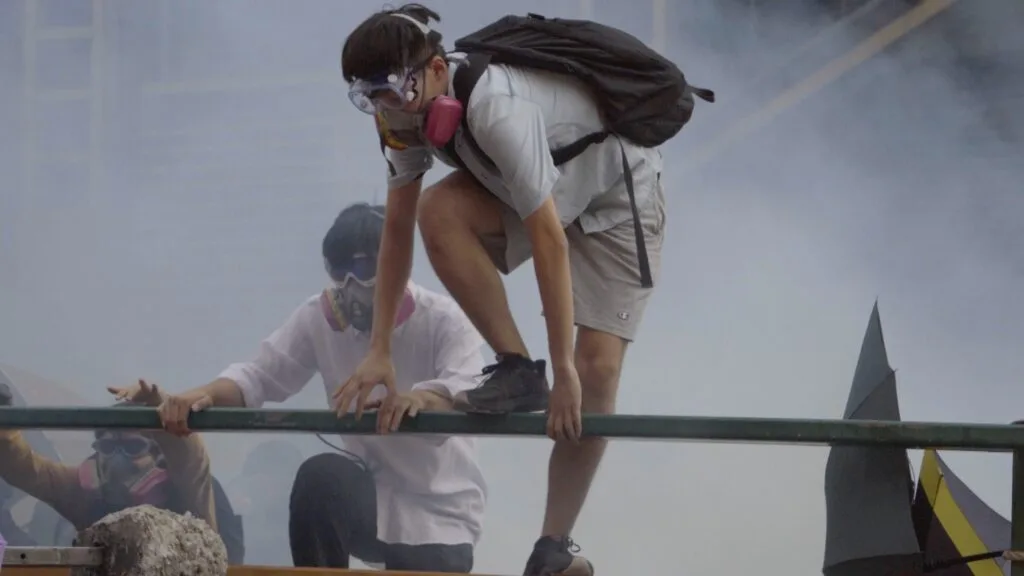
Widespread antigovernment protests.
NARRATOR:
—repression—
MALE NEWSREADER:
It’s a brutal crackdown to suppress dissent.
NARRATOR:
—and war.
MALE NEWSREADER:
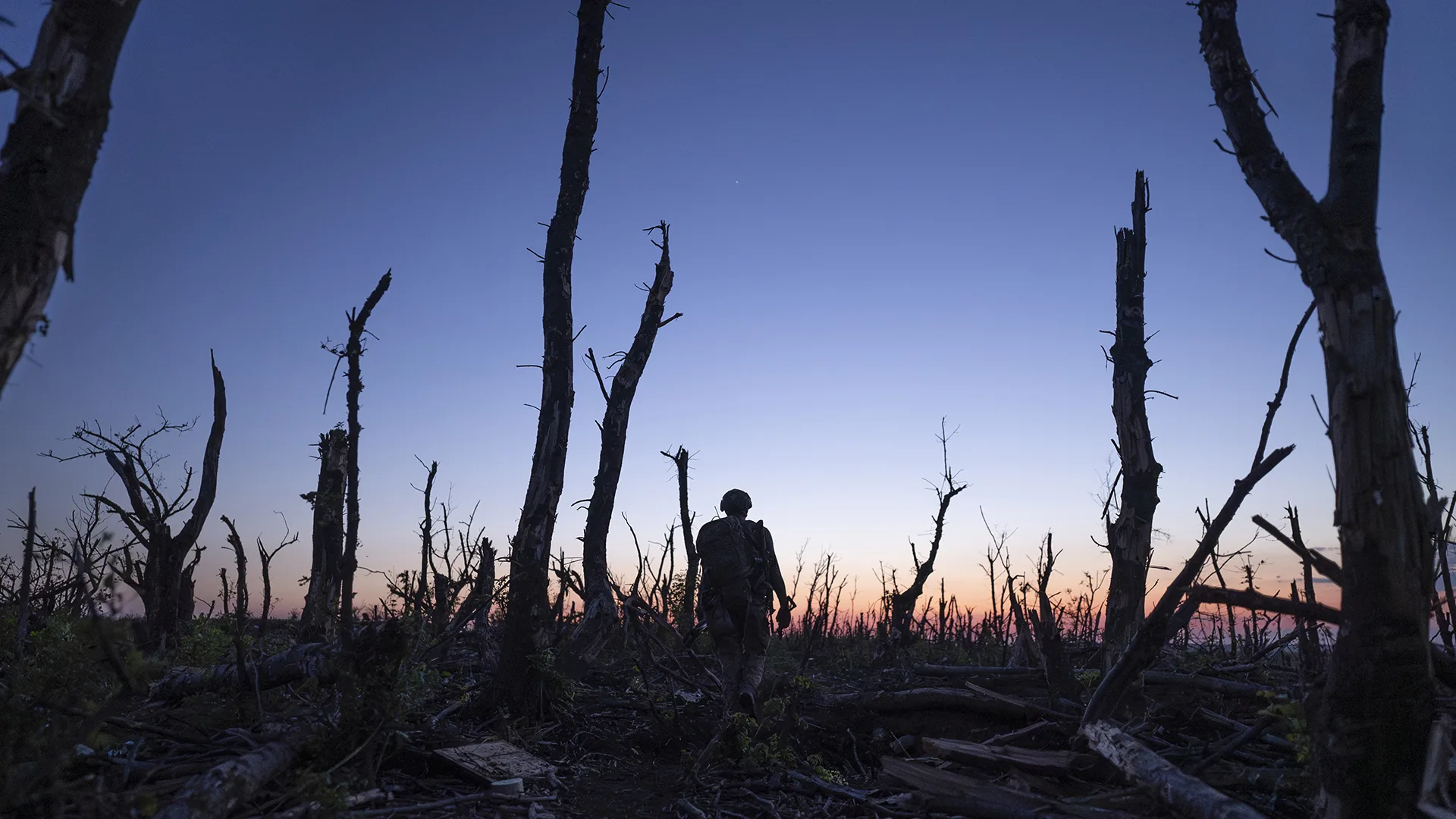
U.S. and Israel unleashed more strikes on Iran—
NARRATOR:
Told by Iranians inside the country and those who have fled.
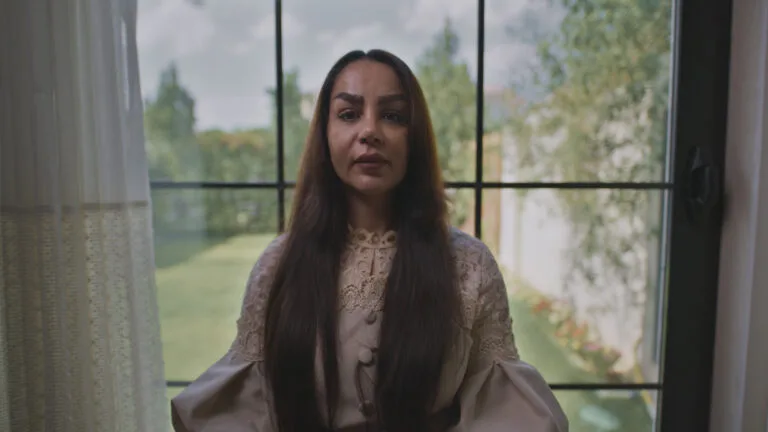
SAMIRA:
[Speaking Farsi] Justice should have been served. If the day of freedom comes, we will show them what justice means.
NARRATOR:
Now on FRONTLINE: Iranians Under Siege.
GESBEEN MOHAMMAD, Correspondent [on phone]:
Hi, Siavash. Let me know when you’ve arrived. And take care of yourself.
SIAVASH:
[Speaking Farsi] The project starts tomorrow. I’m very anxious. We’ll be in touch.
GESBEEN MOHAMMAD:
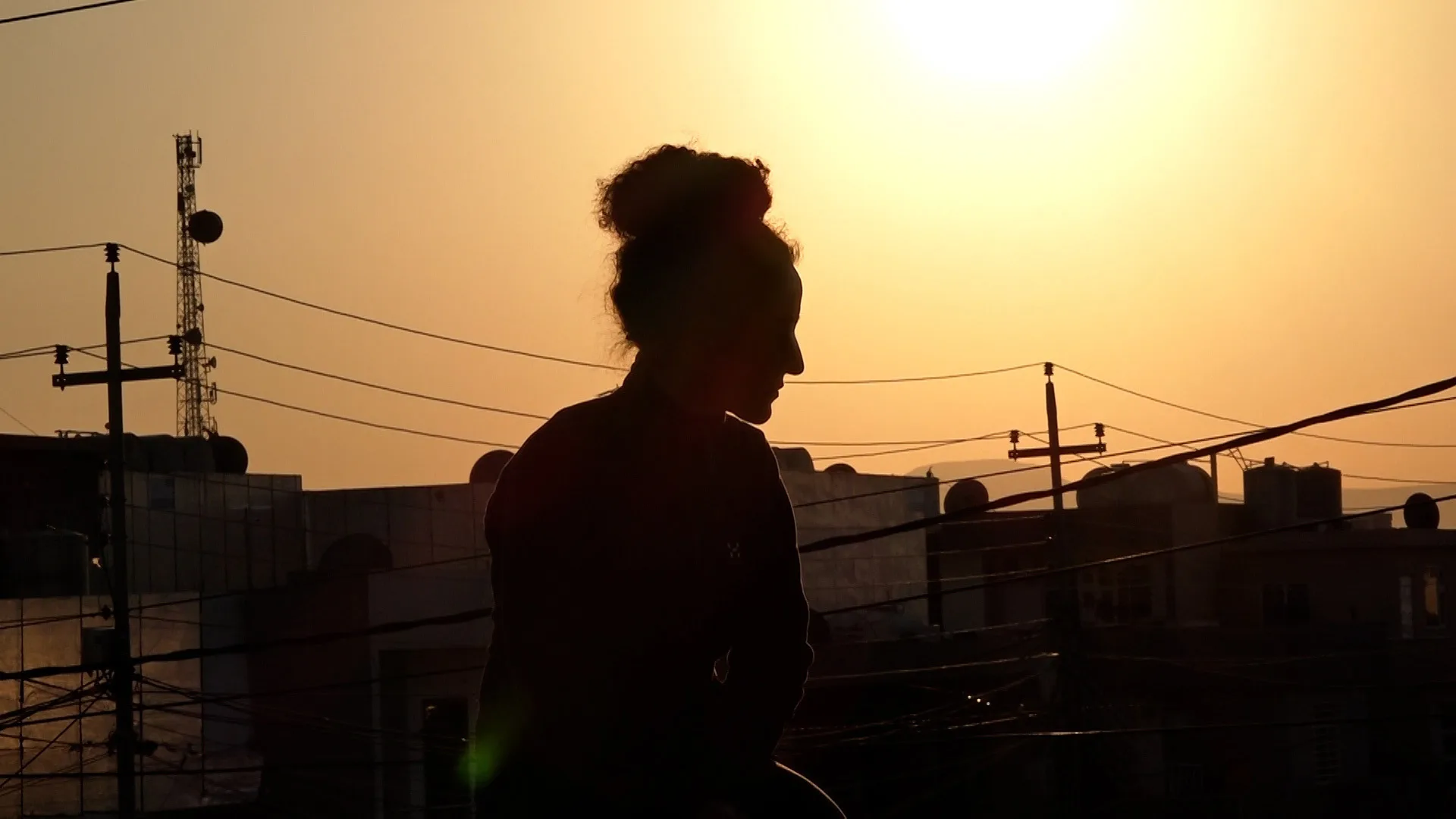
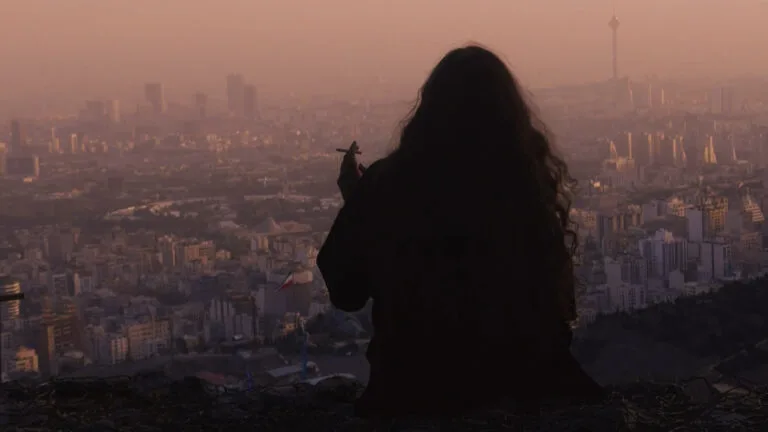
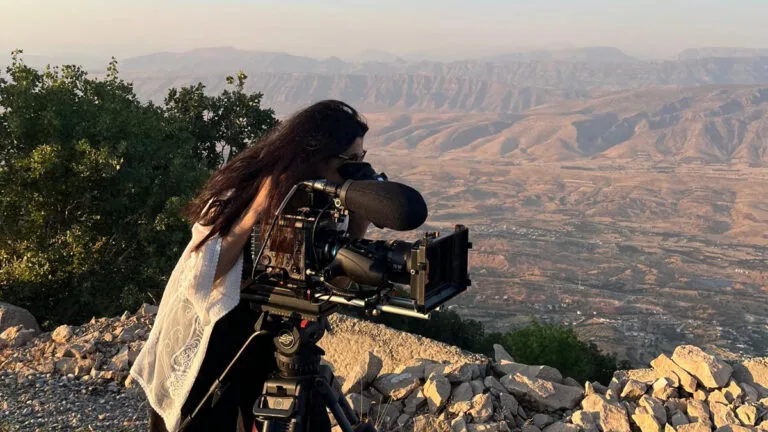
It’s the summer of 2026, and I’m exchanging messages with an Iranian filmmaker. He’s been filming covertly inside Iran, where independent and foreign media are tightly restricted.
SIAVASH:
[Speaking Farsi] If I get caught doing this project, the risks I’m most to face are prison, torture, execution.
GESBEEN MOHAMMAD:
For his protection, we’ve changed his name and altered his voice.
SIAVASH:
[Speaking Farsi] I am a filmmaker and an ordinary Iranian. It is not possible to tell the truth or the whole truth under the Islamic Republic. The role I see for myself is helping the voices that have been erased to be heard.
Our film tells a story the Islamic Republic absolutely does not want anyone inside or outside Iran to see.
GESBEEN MOHAMMAD:
While Siavash was working inside Iran, we were filming with people who’ve just escaped the country.
SAMIRA [on video]:
[Speaking Farsi] I’m coming through the mountains to get myself out of Iran. This crap state, these bastards. They harassed me a lot. But I have no choice. They’re watching me.
GESBEEN MOHAMMAD:
This is the story of a year in the lives of ordinary Iranians. A year of uprising.
MALE PROTESTER:
Mr. Trump, we need your help now.
GESBEEN MOHAMMAD:
War.
PRESIDENT DONALD TRUMP:
To the great, proud people of Iran, I say tonight that the hour of your freedom is at hand.
GESBEEN MOHAMMAD:
Repression and defiance.
SAMIRA:
[Speaking Farsi] My wounds have helped me grow. They made me fight the Islamic Republic
until my last breath.
I don’t understand much about politics. I want future generations to have a better life.
[on video] I’ve got a new helper today. She’s my new girl. She’s here to learn flower and balloon arranging. This is her first session with flowers.
Sevda is my daughter, my only child. She is 16 years old.
Sevda and I are like friends.
Sevda likes to blog, she does Dubsmash videos.
I used to do blogging with her. She wanted to post about the Islamic Republic, but I didn’t let her.
We wanted to be free in society, not live under the Islamic Republic’s restrictions. Every year that passed, we were oppressed more. They silenced us more. They suffocated us more.
Unemployment was getting worse. Poverty and misery. People were fed up. We couldn’t remain silent. We went out to protest.
Tehran
December 2025
PROTESTERS:
[Chanting in Farsi] Close down, close down. Close down, close down.
SAMIRA:
[Speaking Farsi] It first began with the market sellers. Then people started to pour out, one by one.
GESBEEN MOHAMMAD:
Samira told us that growing anger about the economy soon turned into something bigger. By January 2026, protesters were increasingly calling for Iran’s Supreme Leader, Ayatollah Ali Khamenei, to go.
PROTESTERS:
[Chanting in Farsi] Death to Khamenei. Death to Khamenei. Death to Khamenei.
SAMIRA:
[Speaking Farsi] Seeing different areas rise up gave us more hope.
SEVDA [on video]:
[Speaking Farsi] Download my messages you crazy ****. I might die tomorrow.
SAMIRA:
[Speaking Farsi] I was more afraid something bad might happen to Sevda.
January 8, 2026
SAMIRA:
[Speaking Farsi] On the 8th, so many people had come out. We, the people of Iran, just want freedom.
PROTESTERS:
[Chanting in Farsi] Death to the dictator. Death to the dictator.
SAMIRA:
[Speaking Farsi] The security forces had lost control.
PROTESTERS:
[Chanting in Farsi] Death to the dictator.
SAMIRA:
[Speaking Farsi] Their only weapon was to cut the internet and suffocate us and put us back in our place so we wouldn’t report anything happening inside the country to foreign media.
We hoped at least Israel and America would support the Iranian people.
GESBEEN MOHAMMAD:
Six months before the protests, the U.S. and Israel had carried out a bombing campaign across Iran which lasted 12 days.
Now, as the protests spread across the country, President Trump issued a warning to the regime.
DONALD TRUMP:
I have let them know that if they start killing people, which they tend to do during their riots, they have lots of riots, if they do it, we’re going to hit them very hard.
GESBEEN MOHAMMAD:
But a violent crackdown was already underway, led by the Islamic Revolutionary Guards, the IRGC.
Much of what happened next would be hidden from the world by Iran’s internet blackout. But in the months that followed, we started working with Siavash, the Iranian filmmaker.
[voice message] Hi, Siavash. I hope you’re well. Let me know what your plans are. Be careful as always.
SIAVASH:
[Speaking Farsi] Hello, I did the setup. Everything is almost ready, I’m waiting for our “friend” to arrive.
During the protests, people’s voices were silenced. When you talk to people, you realize they need and want to share what they went through. We document it for the historical record.
GESBEEN MOHAMMAD:
As with Siavash, we’re protecting the identities of the people he filmed inside Iran, changing their names and their voices.
SIAVASH:
Sound go. Camera go.
GESBEEN MOHAMMAD:
Milad is a medic who was working at a large hospital when the crackdown began.
MILAD:
I did want to take part as a protester like I did so many times before. But I felt like I could be more of a value when I was actually treating the ones with the most dire needs.
It was after 8 p.m. that the first massive tsunami of patients would arrive.
GESBEEN MOHAMMAD:
Cellphone video from that night shows Iranian medics trying to save the lives of injured protesters.
MILAD:
Whenever I looked outside the hospital, more and more people were being brought in, even into the corridors. One pattern that I noticed: a lot of pellet shots.
GESBEEN MOHAMMAD:
We obtained X-rays showing protesters’ injuries on Jan. 8.
MILAD:
In the head, in the neck, in the genitals. When shot at point-blank range to very sensitive areas, they could be pretty much lethal, as it ended up being for a lot of my patients.
I saw hundreds of patients on the night of Jan. 8. I lost count at the time, because of how surreal it felt.
MINA:
[Speaking Farsi] If we have to choose between a humiliating death and a death while fighting, I think dying while shouting “freedom” is more beautiful.
GESBEEN MOHAMMAD:
Mina is in her 30s. She says she’d joined many protests against the government over the years but had never seen the security forces crack down so violently.
MINA:
[Speaking Farsi] What happened on the night of the 9th, even the most pessimistic person couldn’t imagine it.
January 9, 2026
CROWD:
[Chanting in Farsi] Death to America. Death to America.
GESBEEN MOHAMMAD:
That day, Ayatollah Khamenei publicly blamed the U.S. for the protests and issued a threat to anyone taking part.
AYATOLLAH ALI KHAMENEI:
[Speaking Farsi] They set fire to the rubbish bins so he [Trump] would be pleased.
Everyone should know the Islamic Republic has come to power with the blood of hundreds of thousands of honorable people.
Against those who are vandals, the Islamic Republic will not back down.
AUDIENCE:
[Chanting in Farsi] God is great. God is great. God is great.
MINA:
[Speaking Farsi] What I remember from the events is the sound of people groaning when they were hit by a bullet. Women and children screaming as they fled.
GESBEEN MOHAMMAD:
That night, the violence escalated across Iran. In some parts of the country, protesters attacked and killed members of the security forces.
The regime would go on to kill thousands of protesters.
MINA:
[Speaking Farsi] Their intention wasn’t to stop us protesting and send us home. They came to mow us down.
I used to think only in war would you see so many people fallen on the ground.
MILAD:
The thing about Jan. 9 is that every single patient that I saw was injured by live ammunition. I treated old people, middle-aged people and teenagers. They were shot at with the intent to kill. I saw this. I saw those patients. I saw those wounds.
A massacre is actually what I witnessed.
I don’t know how I can live with it, but I mean, I will have to for the rest of my life.
SAMIRA:
[Speaking Farsi] On Jan. 9, Sevda and I went out. It was a little after 8 p.m.
Their patrol cars announced they had orders to shoot anyone who went out.
We were right at the front. Sevda was chanting, and the protesters would repeat her chants. It felt like they saw her as a leader.
Then a sniper shot at Sevda and she came towards me. She came towards me. She tried to breathe but couldn’t and collapsed.
[Crying] I couldn’t even scream. I just stared at Sevda lying there lifeless. Blood gushed out of her mouth and nose, but I couldn’t believe she was dead. Her eyes kept staring at me. I didn’t want her eyes to close.
GESBEEN MOHAMMAD:
Samira rushed her daughter to a nearby hospital. She says IRGC forces were also there.
SAMIRA:
[Speaking Farsi] First they took her to a room. A few doctors, security forces and the IRGC were standing over Sevda. They turned to me and said, “She’s gone.” I screamed and shouted. They threw me out of the room.
The door opened for a moment. I saw that Sevda wasn’t there, only the men. I didn’t see her again.
They wouldn’t tell anyone where their child’s body was. We searched a lot.
GESBEEN MOHAMMAD:
She went to Kahrizak, one of Tehran’s largest morgues, where other grieving families were also looking for their loved ones.
SAMIRA:
[Speaking Farsi] Truck after truck. Teenagers, young girls and boys. So many had been killed.
[Crying] I died with every bag I unzipped. I’d never seen so many bodies.
We looked for several days until we found Sevda’s body. Three bodies were piled on top of Sevda. That’s how we found her.
[Crying] I miss you so much. You’ll always be in my heart.
GESBEEN MOHAMMAD:
To get Sevda’s body back, she had to agree to say that her daughter had been killed by the U.S. and Israel.
SAMIRA:
[Speaking Farsi] We had to obey their orders just to get her body back. They were forcing families to declare terrorists killed the protesters. They meant American and Israeli-backed terrorists who entered Iranian territory.
But I didn’t know it was only the beginning. My future was buried with Sevda.
GESBEEN MOHAMMAD:
By mid-January, the protests had been largely stamped out.
The Iranian government told us in a written statement that peaceful and legitimate protests had been hijacked by foreign powers, including the U.S., which they said promoted violence, provided weapons and equipment and compromised public security.
ALI KHAMENEI:
[Speaking Farsi] In the name of God, the compassionate, the merciful. … They committed great crimes. … They murdered several thousand people, some with inhuman intensity. They murdered in a very savage manner.
GESBEEN MOHAMMAD:
Seven weeks after Sevda was killed, Samira was smuggled out of Iran.
SAMIRA [on video]:
[Speaking Farsi] At the border, leaving with smugglers. Look, down there is a valley. Something bad could happen to me at any moment.
GESBEEN MOHAMMAD:
She filmed her journey over the mountains to the neighboring Kurdistan region of Iraq.
SAMIRA [on video]:
[Speaking Farsi] It’s hard, but I have to make it to the day of my daughter’s revenge. To take revenge on the state for my daughter.
Kurdistan
Iraq
GESBEEN MOHAMMAD:
Before fleeing, she’d spoken to reporters and posted on social media, publicly blaming Iranian forces for her daughter’s death.
SAMIRA:
[Speaking Farsi] After Sevda’s killing and my interviews with the media, they put me under pressure.
Several times they took me to the intelligence office, and they threatened me in every way imaginable.
They said, “You have to come speak on our media.” They said to say the “people” killed Sevda. They killed her and they wanted to force me to say something that never happened.
I didn’t do the interview, I fled.
It was Feb. 27 when I reached Erbil. The next day, the war began.
DONALD TRUMP:
To the great, proud people of Iran, I say tonight that the hour of your freedom is at hand.
February 28, 2026
GESBEEN MOHAMMAD:
As the U.S. and Israel launched a new round of airstrikes against Iran’s nuclear and missile sites, President Trump raised hopes for something else: regime change.
DONALD TRUMP:
When we are finished, take over your government. It will be yours to take.
MINA:
[Speaking Farsi] Maybe this war would lead to regime change. I can’t have 100% trust in any foreign country and whether they want the best for us. But do I think the way for them to go is through military conflict with a stronger country? Yes, definitely.
GESBEEN MOHAMMAD:
On the first day of the war, Ayatollah Khamenei was killed in an Israeli airstrike in Tehran.
MINA:
[Speaking Farsi] That night when Khamenei was confirmed dead I heard the sound of cheering outside. Laughing and crying, I shouted the news of his death to the neighborhood.
Perhaps I was more scared of them staying in power than being killed by a bomb.
There might be a 1% chance we’ll be free.
HAMID:
[Speaking Farsi] Many times Trump promised to attack, and people always wanted that. Many thought Khamenei’s death would end the regime.
GESBEEN MOHAMMAD:
Hamid is a Kurdish Iranian. Before the war, he’d been jailed, and then put under house arrest, for criticizing the Iranian regime on social media.
HAMID:
[Speaking Farsi] My arrest was over by the time the U.S. attacked Iran. I felt fear and joy at the same time.
GESBEEN MOHAMMAD:
Shortly after Khamenei’s death, Iranian authorities began rounding up opposition activists.
HAMID:
[Speaking Farsi] At 11:30 one night I saw 30 to 40 IRGC agents in the alley, and they were armed. Two agents grabbed me by the arm. They said, “Let’s go inside.”
“You’re happy Khamenei was killed?” They accused me of working for Israel. They were scaring me. They wanted me to confess at home so they could have me arrested.
When the war began they wanted to take revenge on the people by any means possible.
GESBEEN MOHAMMAD:
Hamid told us the IRGC were about to detain him, but as their bases were being bombed they had nowhere to take him.
HAMID:
[Speaking Farsi] In the end, he told me to turn myself in the following morning.
I only had one option, leave the country. I had so many worries. Leaving my family, my country.
My life changed overnight. I never wanted to leave, but I was forced to.
GESBEEN MOHAMMAD:
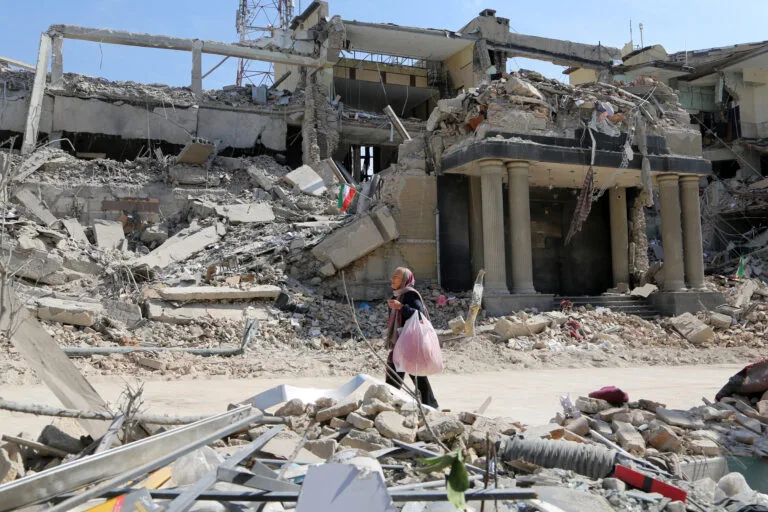
In the first 48 hours of the war, over 1,000 sites were hit across Iran. They included a school in the city of Minab. Iranian authorities say 120 children were killed in the strike.
SIAVASH:
[Speaking Farsi] It’s impossible to wake up one morning and discover that so many innocent children went to school that day and died, without even a body left behind.
Naturally, as fellow citizens, as human beings, people are angry, saddened and hurt by the deaths of innocent people who died because of these larger political games.
Unfortunately, the regime immediately tried to claim the incident for itself and use it for its own agenda and propaganda.
IRANIAN PROPAGANDA VIDEO:
[Singing in Farsi] Now the whole world has seen Minab.
SIAVASH:
[Speaking Farsi] The war was like a gift to the Islamic Republic. It gives them the opportunity to quietly shift attention away from their own mass killings, from what happened in January, to the war. There’s no mention of the oppression of its own people.
Kurdistan
Iraq
SAMIRA:
[Speaking Farsi] After I left Iran they built a case against me: [Reading] Offenses against the country’s internal and external security. Waging war against God and corruption on earth. Armed rebellion against the system. Insulting the founder of the Islamic Republic and the Supreme Leader. Espionage and related offenses.
Waging war against God alone means execution.
I couldn’t stay silent. I wasn’t willing to give into their blackmail. Just because I spoke out about my child and continued her fight, they might execute or arrest me, but all I want is to celebrate Sevda.
GESBEEN MOHAMMAD:
As the U.S. and Israeli strikes continued, the regime retaliated across the Middle East, and it closed the important international shipping route through the Strait of Hormuz.
For Iranians, the war was becoming a part of daily life.
SIAVASH:
[Speaking Farsi] Hi, you OK? Sorry, the internet is messed up. I’m not doing great because of the bombing of the cities.
During the war, while I was away working, the city where my family lives was bombed. There was also bombing close to my family’s home. You’re anxious that you could be the next missile’s target while you’re also trying to avoid the security forces and making a film.
It feels like people are being crushed between two enormous concrete walls.
GESBEEN MOHAMMAD:
Shirin is a writer who’d taken part in the January protests. About a month into the war, she was visiting a friend outside of Tehran.
SHIRIN:
[Speaking Farsi] We wanted to get away from the war. Through loud music and conversation, the darkness outside gradually left our minds.
Before I knew what was happening, both the flash of light and the sound of a massive explosion had come and gone. I was in mid-air and falling down with the rubble and dust. I didn’t see anything or anyone.
It took me a long time to work out whether I was alive or dead. I couldn’t really understand how badly I’d been hurt. I was left with broken bones.
I came out of the rubble a different person.
I hate both sides. Those who have been ruling our country for 47 years, and those who attacked our country.
Kurdistan
Iraq
HAMID:
[Speaking Farsi] Life has turned harsh. Now that I left, I can’t even be in touch with my own family. I also don’t want to get in touch with anyone, because I fear they’ll be arrested for being in contact with me.
GESBEEN MOHAMMAD:
Hamid had escaped Iran, but a cousin, Naser, was still in prison there.
HAMID:
[Speaking Farsi] We’re not just relatives, we’re friends. He is a young man full of life.
GESBEEN MOHAMMAD:
Hamid told us Naser had been given permission by the police to take pictures of tourist sites for a travel agency. A few months later he was detained by the IRGC.
HAMID:
[Speaking Farsi] They arrested Naser and accused him of spying for Israel. They were only from tourism sites.
GESBEEN MOHAMMAD:
Naser was filmed for state television confessing to spying for Israel.
NASER [in confession video]:
[Speaking Farsi] Someone sent me a WhatsApp message saying, “Hello, are you interested in working with us?” He sent his Instagram page.
HAMID:
[Speaking Farsi] Naser and I spent three months in prison together. When I was in prison, Naser told me they’d pressured him a lot.
Naser told me, “I tried to kill myself.”
NASER [in confession video]:
[Speaking Farsi] Taking pictures of places like data centers … taking pictures of two police stations … I did that and I sent him the photos.
HAMID:
[Speaking Farsi] When I saw Naser’s confession video by the IRGC intelligence, I was stunned. He was innocent. People confess to things they haven’t done just to get out of that hell. I saw the fear in his eyes.
The Islamic Republic showed its war against the people continues. The regime suppressed people, viewing everyone as its enemy.
Iranian government video
July 2026
GESBEEN MOHAMMAD:
Four months after his assassination, Ayatollah Khamenei was buried. His son had been named successor but remained in hiding. The IRGC was widely regarded to be running the country.
MINA:
[Speaking Farsi] The issue is the IRGC. The power that controls us is not one person. Imagine a mafia that has no rules. It’s a powerful, wealthy military organization that we can’t stand up to.
They’ll show me no mercy. You’ve just made them a more dangerous creature for me. If any form of war continues, that makes life even more difficult for an ordinary person like me without overthrowing those in power, it’s a betrayal.
We’re fighting here just to stay alive, just to survive.
MALE VOCALIST:
[Singing in Farsi] The sky is filled with light. Our house is filled with a heartwarming echo.
GESBEEN MOHAMMAD:
Samira’s friends and family held a vigil to mark what would have been Sevda’s 17th birthday.
MALE VOCALIST:
[Singing in Farsi] With you, my life is like heaven. Our home is full of roses and carnations. I love you, my darling. Happy birthday. Happy birthday.
GESBEEN MOHAMMAD:
From exile, Samira watched the party online.
SAMIRA:
[Speaking Farsi] Girls of Sevda’s age were in white, wearing T-shirts with her picture on them.
I felt very bad that I wasn’t at the ceremony. The only person I had in the world was my daughter. Suddenly, the livestream I was watching cut out.
GESBEEN MOHAMMAD:
The party was broken up. Samira says the IRGC arrested some of her family and friends. She called someone inside Iran to find out more about what had happened.
SAMIRA:
[Speaking Farsi] Hello.
DISGUISED VOICE [on phone]:
[Speaking Farsi] Hello.
SAMIRA:
[Speaking Farsi] Did you find out which agencies took the kids away like that?
DISGUISED VOICE [on phone]:
[Speaking Farsi] IRGC Intelligence from Tehran. The ceremony was almost over when they swarmed in and took many kids. Samira, they took away eight van loads of kids. They said, “You issued a call for action. You’ve s— all over the Islamic Republic. It will become a tradition. People will want to celebrate the birthdays of anyone killed. Why have you brought musical instruments?”
SAMIRA:
[Speaking Farsi] Why would they have a problem with that?
DISGUISED VOICE [on phone]:
[Speaking Farsi] You’re talking as if you haven’t lived in Iran. Here, you have to justify yourself just for walking down a street. This is the Islamic Republic.
They’re showing their true colors to the world.
SAMIRA:
[Speaking Farsi] I’m worried about the pressure on my family. Until my last breath, I will not give up avenging my daughter’s killing.
FEMALE VOICE [on phone]:
[Speaking Farsi] This call is from Urmia Prison. The caller is a prisoner—
NASER [on phone]:
[Speaking Farsi] My name is Naser Bakrzadeh and you’re hearing my voice from Urmia Central Prison. This may be the last time you hear my voice.
GESBEEN MOHAMMAD:
After more than two years behind bars, Hamid’s cousin Naser was allowed to make a phone call and recorded a final plea.
NASER [on phone]:
[Speaking Farsi] I was planning to ask for a girl’s hand in marriage. … Now, a few hours since I heard the news of my sentence being confirmed, I don’t know how to call and tell her that my sentence has been confirmed. I’m about to be executed.
HAMID:
[Speaking Farsi] When I first heard it, I could picture the noose around Naser’s neck. Every day, I’d listen to Naser’s voice 10, 20, 50 times.
NASER [on phone]:
[Speaking Farsi] The death sentence killed me. I fell apart. Every moment I see myself dying, and it’s destroyed my family.
HAMID:
[Speaking Farsi] Everyone knew Naser was innocent. Naser’s court case was very much influenced by the protests and the war and the political situation in Iran.
The victims were used to terrorize people.
NASER [on phone]:
[Speaking Farsi] Don’t just hear the word “execution” and move on. Today it’s my turn. Tomorrow it will be someone else’s.
HAMID:
[Speaking Farsi] Unfortunately, Naser was executed. It felt as if I’d been executed.
GESBEEN MOHAMMAD:
It’s estimated that dozens of Iranians have been executed in 2026 on political and security charges—more than 30 related to the January protests alone. Tens of thousands have been arrested and accused of opposing the government, which has continued to defend its actions as lawfully punishing criminals and enemy collaborators.
HAMID:
[Speaking Farsi] They took everything from me and now I’m far away from my home, from my family. I was forced to leave just so I could live. I knew what would happen to me if I stayed. The regime has become more evil, and their main goal is regime survival.
GESBEEN MOHAMMAD:
After almost nine months of war, the bombing has largely stopped—for now.
November 2026
GESBEEN MOHAMMAD:
The Iranian regime is still in power and seems more entrenched than ever.
MALE VOICE:
[Speaking Farsi] Death to America.
DONALD TRUMP:
We’ll see what happens. I don’t guarantee anything, but if we do have to go back in, we are locked and loaded and ready to go.
SIAVASH:
[Speaking Farsi] What has been erased is humanity, because the daily lives of ordinary Iranians is not the Strait of Hormuz, or nuclear bomb or missile capability. It’s the daily struggle to put bread on the table. It’s basic human rights. And all of that is being lost between these grand narratives.
I’m worried about my country’s future. The current situation for Iran’s people is like an unending nightmare.
SAMIRA:
[Speaking Farsi] I’m stuck in Jan. 9. Every day, every second without Sevda is a struggle, like being a mother who’s lost her heart.
GESBEEN MOHAMMAD:
Even in exile, Samira fears the regime will come after her.
She’s continued to speak out.
Online, she’s named members of the security forces she claims killed protesters the night her daughter died.
SAMIRA [on video]:
[Speaking Farsi] Before they catch me, I want to get some information out. … These are the mercenaries of the massacre that took place on the 8th and 9th in Marlik, Malard. These people killed our children.
I’m very happy to be exposing the Islamic Republic. Justice should have been served. If the day of freedom comes, we will show them what justice means.
GESBEEN MOHAMMAD:
One of the men Samira identified online was later abducted and killed. A prominent regime supporter blamed her and has put a bounty on her head.
MALE VOICE [on video]:
[Speaking Farsi] This bitch is the main perpetrator of the crime against Hamidreza Rajabzadeh. … Whoever tells us where she is or hands her over alive, I’ll give them a $5,000 reward.
SAMIRA:
[Speaking Farsi] Many have offered a reward for me. They might take me to the brink of death then they’ll execute me. Right now, I’m at a different location and no one knows where I am. No one wants to be caught by the Islamic Republic.
The only thing that may give me peace is the day of revenge.